In the field of material wear resistance evaluation, the TABER 5750 Abrasion Tester is a widely used and highly capable professional testing instrument. It provides repeatable and quantifiable results for evaluating the wear and scratch resistance of coatings, plastics, rubber, leather, metal components, and textiles.
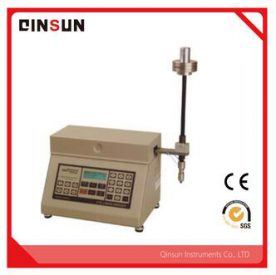
This article presents a comprehensive FAQ-style overview of the instrument, including its definition, operating principle, performance parameters, common applications, and operation and maintenance, helping researchers, quality engineers, and students fully understand this testing device.
The TABER 5750 Abrasion Tester, also known as a Linear Abrasion Tester, is specifically designed to evaluate:
Surface wear resistance
Scratch resistance
Frictional colorfastness (crocking)
Resistance to surface damage
The instrument uses reciprocating linear motion to apply a controlled load and abrasive medium on the sample surface, simulating real-life friction conditions. This allows quantitative comparison of different materials or samples.
Compared to rotary abrasion testers, the 5750 model’s linear motion makes it better suited for non-flat, curved, or contoured samples, accommodating a wider range of product shapes and complex surfaces.
The TABER 5750 operates by moving an abrasive medium (such as abrading heads, wheels, or specialized abrasives) back and forth across the sample surface. Key features include:
Free-floating heads, which adjust vertically to follow surface curvature, ensuring continuous contact on flat or curved surfaces
Adjustable parameters such as stroke length, number of cycles, speed, and applied load, allowing simulation of real wear or scratching conditions
This flexibility makes the instrument suitable for engineering tests, R&D evaluation, and standard compliance testing.
The TABER 5750 supports the following main adjustable parameters:
Stroke Length
Multiple standard stroke lengths are available, typically ranging from 0.2 inch to 4.0 inch (5 mm to 102 mm)
Users select based on sample size and testing requirements
Stroke Speed
Adjustable speed ranges from 2 to 75 strokes per minute
Preset options such as 2. 15. 25. 30. 40. and 60 strokes per minute are available
Load / Weight
Load applied to the abrasive medium can be adjusted using counterweights
Standard range: 350 g to over 2100 g, simulating different friction conditions
Number of Cycles
Programmable from a few cycles to 999.999 cycles, allowing short-term or long-term wear testing
The TABER 5750 is versatile and supports multiple test modes with appropriate attachments:
Dry and Wet Abrasion Testing
Tests can be conducted under dry or wet conditions to assess wear behavior in different environments
Scratch Resistance
Special scratch attachments (diamond tips or spherical styluses) allow single or multiple scratch tests
Crocking / Color Transfer Test
Dedicated kits enable frictional colorfastness evaluation
Specialized Scratch Tests
Coin-holding attachments or other specialized fixtures simulate realistic scratch scenarios
Thanks to linear motion and adjustable parameters, the TABER 5750 is suitable for testing:
Plastics and coatings: e.g., IT device housings or plastic coatings
Rubber and elastomers: friction durability of rubber components
Leather and textiles: clothing or footwear surface wear
Metal coatings and electroplated layers: wear evaluation
Printed patterns and surface decorations: durability under friction
The instrument also accommodates irregular surfaces and composite components.
The TABER 5750 can support testing under many national and international standards, such as:
ASTM: D3884. D1044. D1175. D4060
TAPPI: T476
ISO: 9352. 5470-1
Various JIS and DIN standards
AATCC Method 8. ISO 105-X12 for frictional colorfastness
These standards cover coatings, textiles, surface decorations, wear, scratch resistance, and colorfastness, making the 5750 a versatile laboratory and quality control instrument.
Choosing Abrasive Medium
Common options include CS-10. H-18. etc., selected according to material type and standard requirements
Adjusting Load
Counterweights simulate light or heavy friction conditions
Setting Stroke Speed and Number of Cycles
Determines wear intensity; adjust according to standards or real-life simulation
Sample Fixing
For small or irregular samples, use sample holders to ensure test accuracy and repeatability
Key observations include:
Wear marks: surface morphology, width, and depth indicate wear severity
Mass or thickness change: quantifies material loss
Surface function degradation: e.g., loss of gloss, pattern damage, color fading, scratches
Comparing different samples under identical conditions allows quantitative assessment of wear resistance.
Can it test contoured surfaces?
Yes, the free-floating heads follow surface curves, enabling testing of bent plastic parts, automotive interiors, and other contoured samples
Does it support both dry and wet abrasion?
Yes, both modes are supported to evaluate materials in different environments
How to choose the right abrasive medium?
Depends on material hardness, surface properties, and test standards. CS-10 is suitable for general materials, H-series for higher wear resistance requirements
Is regular calibration needed?
Yes, check stroke speed, counterweights, and abrasive condition regularly; replace worn parts to maintain accuracy
Are test results repeatable?
Yes, standardized parameters and design ensure highly consistent results for quality control and R&D
To ensure long life and stable performance:
Clean the moving arms, abrasives, and sample holders regularly
Inspect and clean guides and bearings for smooth reciprocating motion
Replace worn abrasives and weights according to standards
Update software and control systems to maintain proper recording and analysis functions
The TABER 5750 Abrasion Tester is a comprehensive, parameter-adjustable instrument for evaluating wear and scratch resistance across diverse materials and surfaces.
With reciprocating linear motion, adjustable load, and versatile attachments, it supports dry and wet abrasion, scratch tests, color transfer tests, and more. Its compatibility with international standards makes it an essential tool for quality control, R&D, and material performance evaluation.
Mastering proper test setup, sample preparation, and data interpretation enables accurate assessment of material wear, enhancing product quality and durability.


