Surface scratches and marks are important indicators of a material’s durability and service life. To quantitatively evaluate a material’s resistance to scratches, mar, gouges, abrasion, and other physical damage, the Multi Finger Scratch/Mar Tester has been developed. This instrument is widely used in research and development, quality control, and production inspection of plastics, coatings, rubbers, metals, and other solid materials. It holds particular importance in industries such as automotive interiors, consumer electronics, and construction materials.
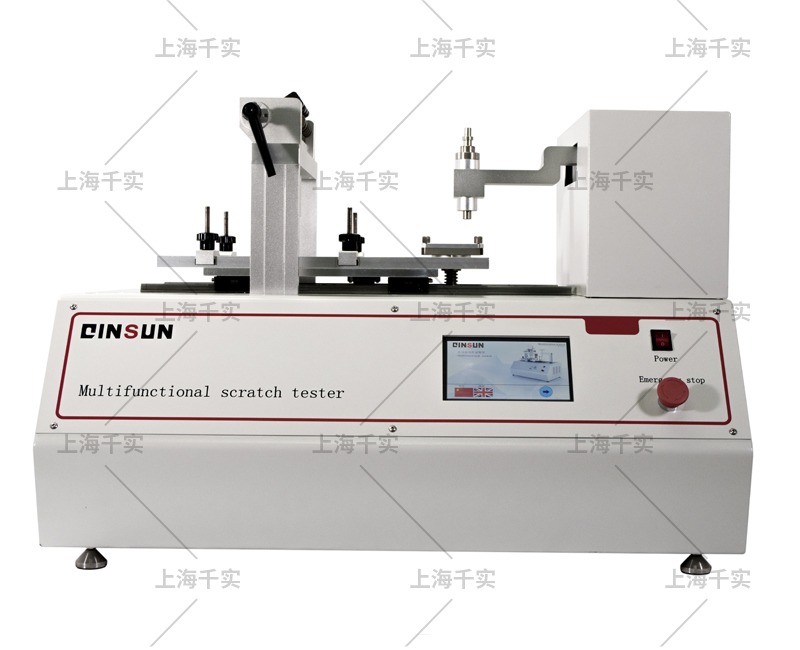
The Multi Finger Scratch/Mar Tester is a specialized device for assessing surface performance of materials. It uses multiple “fingers” (or scratch heads) to apply standard loads to a sample while the sample moves back and forth in a specified direction, creating scratches that measure the material’s resistance to external abrasion. Standard designs typically use five independently supported fingers, earning it the alternate name “Five Finger Scratch/Mar Tester.” This design was primarily inspired by automotive industry standards for evaluating scratch resistance.
The tester allows adjustment of load, movement speed, and number of cycles, making it suitable for a variety of surface conditions—from smooth plastics and coated surfaces to textured materials. This versatility makes it valuable both in R&D laboratories and in quality control processes.
The core of the Multi Finger Scratch/Mar Tester consists of a rigid beam structure with multiple independent fingers and a movable sample platform:
Sample Platform: The platform is pneumatically driven and can move linearly, simulating the back-and-forth motion of a scratch. The speed can be adjusted via control knobs or regulators, allowing for single or repeated passes.
Multi-Finger Structure: Five independent spline-axis fingers move freely up and down. Each finger has a replaceable scratch or mar tip at its lower end. Different weights can be loaded atop each finger to apply a consistent vertical force on the sample, simulating scratches of varying intensity.
Load and Test Range: Standard loads range from approximately 2 N to 20 N, with optional weights available for precision testing of lighter or heavier surfaces. The instrument can test flat samples as well as slightly curved but rigid specimens.
During testing, the platform moves the sample under the fingers, generating continuous scratches. By analyzing the frequency, depth, width, or visual appearance of the scratches, material resistance to abrasion and marking can be evaluated.
The Multi Finger Scratch/Mar Tester generally includes the following key components:
Sample Fixture: Securely holds the sample to prevent displacement during testing. Some models use spring clamps or adjustable fixtures to accommodate different sample sizes.
Pneumatic Moving Platform: Drives the sample linearly under the fingers. Speed and stroke are adjustable to meet various testing standards.
Multi-Finger Assembly: Five independently supported fingers mounted on a rigid gantry. Each finger’s tip is replaceable, with scratch tips often made of precision hard alloy (e.g., tungsten carbide) to ensure consistent scratch generation.
Adjustable Load System: Weights can be applied to the fingers’ tops to vary the load from light to heavy. Optional precision weights allow testing of delicate surfaces.
Control and Timing System: Electronic timers display platform speed or test duration. Some systems connect to computers for data recording and analysis, and integrated lubricators improve stability and longevity.
Results from the Multi Finger Scratch/Mar Tester can be evaluated in several ways:
Visual Inspection: Observing the sample under standard lighting conditions to check scratches based on depth, color change, or surface texture. Grading scales are often used to quantify scratch severity.
Width/Depth Measurement: Optical microscopes or profilometers can measure scratch dimensions, providing quantitative data for abrasion resistance evaluation.
Image Analysis: Software-based or SEM analysis can capture surface morphology changes, revealing microstructural damage or deformation during scratching.
Combining visual and quantitative assessments provides a comprehensive understanding of a material’s scratch and mar resistance.
The Multi Finger Scratch/Mar Tester has broad applications across industries and material research fields:
Automotive Interior Materials: Plastics, rubbers, and coated surfaces in car interiors require scratch resistance evaluation due to contact with keys, tools, and hands. This testing method aligns with multiple automotive industry standards to ensure interior durability.
Plastics and Engineering Materials: ABS, PC, PP, and other plastics widely used in consumer electronics, appliances, and industrial equipment benefit from scratch testing to evaluate formulation or process effects on surface performance.
Coatings and Surface Treatments: Paints, coatings, and films rely on scratch resistance for product quality. Multi Finger testing helps assess new formulations and verify durability of existing coatings.
Soft Materials and Leather: Materials such as natural or synthetic leather are prone to scratches and abrasion. Load and tip type can be adjusted for accurate testing of these softer surfaces.
The Multi Finger Scratch/Mar Tester meets multiple industry standards and is often used to comply with requirements from automotive manufacturers such as GM, Ford, and BMW. National and international standards for materials, including plastics, also reference scratch and mar resistance testing, ensuring repeatability, comparability, and industry acceptance.
When selecting a Multi Finger Scratch/Mar Tester, key factors include:
Load Range: Ability to apply low loads for soft materials or high loads for hard coatings.
Tip Type: Compatibility with different tip shapes or materials, such as standard spheres, conical points, or diamond tips.
Sample Compatibility and Usability: Ability to test various sample thicknesses or curvatures, ease of programming, and data acquisition.
Data from Multi Finger tests provide more than pass/fail criteria—they guide material development and process optimization:
Scratch width and depth inform adjustments to material formulations to improve surface hardness.
Visual changes indicate appearance stability under real-world use.
Comparing results under different loads helps set realistic quality standards and user expectations.
Systematic testing allows manufacturers to select high-quality materials during R&D and maintain consistent product performance during production.
In summary, the Multi Finger Scratch/Mar Tester is a precision instrument designed to evaluate surface scratch and mar resistance. Its multi-finger design and adjustable load system accommodate a wide range of materials and testing standards. By providing precise, controlled testing and comprehensive data analysis, it supports quality control, material research, and performance optimization, playing a critical role in automotive interiors, plastics, coatings, and other industries. Rigorous surface durability testing ensures improved product quality, extended service life, and enhanced user experience.


