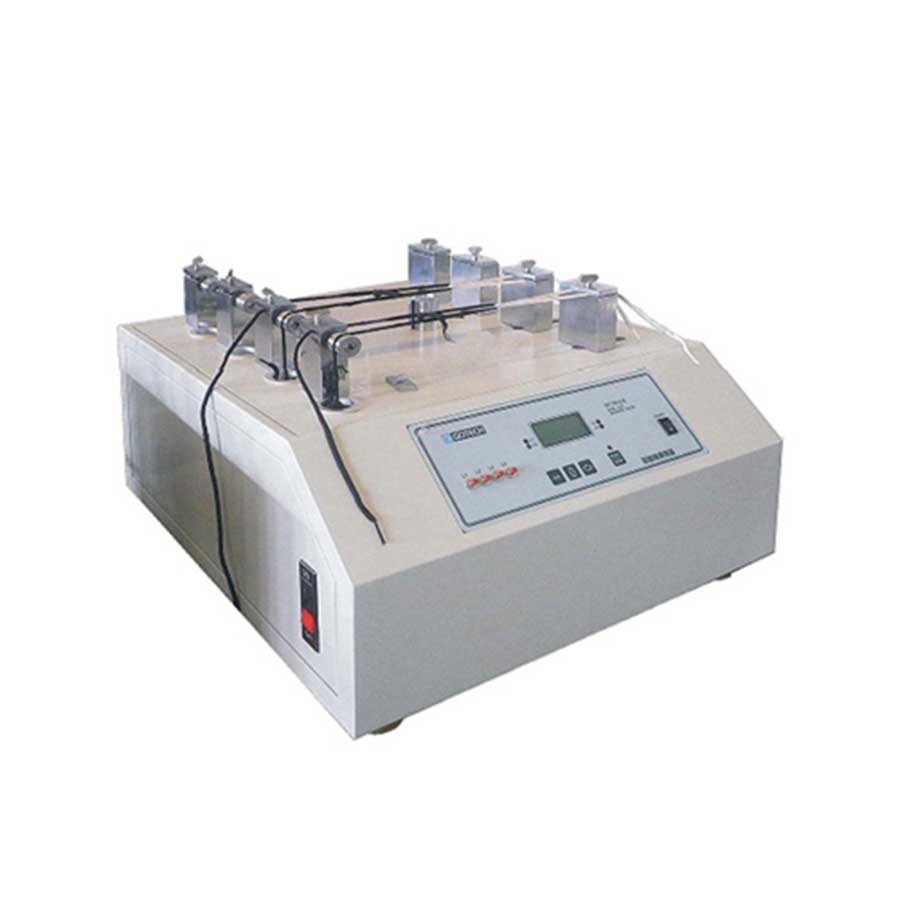
During daily use, shoelaces need to be repeatedly tightened and loosened, causing frequent friction with eyelets, shoe uppers, and even with themselves. Insufficient abrasion resistance may lead to problems such as fuzzing, fraying, and breakage, thereby shortening the service life of shoes. The Shoelace Abrasion Resistance Tester can accurately evaluate the abrasion resistance of shoelaces made from different materials and manufactured through different processes by simulating friction conditions during actual use.The Shoelace Abrasion Resistance Testing Machine is a professional device used for testing the abrasion resistance performance of shoelaces. It mainly evaluates the durability of shoelaces by simulating the friction conditions that occur during actual usage. Although shoelaces are only a small accessory of footwear, they directly affect wearing comfort, product quality, and brand reputation.
1. Working Principle
Friction Method
The testing machine fixes both ends of the shoelace with clamps, allowing the shoelace to contact with friction materials such as sandpaper or fiberboard under a specified tension.
The shoelace performs reciprocating friction movements at the preset speed and number of cycles, simulating the wear process that occurs during actual use.
Data Recording
The tester records data such as the number of friction cycles and the degree of wear, and automatically determines whether the shoelace has broken or reached the preset abrasion criteria.
2. Equipment Functions
Abrasion Resistance Testing
Simulates the wear conditions of shoelaces under repeated bending, stretching, and friction, and evaluates their resistance to abrasion.
Breaking Strength Testing
Detects whether the shoelace breaks during the abrasion resistance test and records the number of friction cycles or the duration of testing when breakage occurs.
Data Recording and Analysis
Automatically records test data including friction cycles, testing time, and breakage location, and generates test reports to support quality analysis and product improvement.
Multi-Scenario Simulation
Simulates different friction conditions between shoelaces and eyelets, as well as between shoelaces and shoe uppers, meeting the testing requirements of various types of shoelaces.
Simulation of Real Usage Conditions
The tester can accurately simulate the friction conditions of shoelaces passing through shoe eyelets under tension, such as the friction between shoelaces and eyelets during walking and the stretching friction generated when tightening shoelaces. This allows precise evaluation of the abrasion resistance performance of both shoelaces and shoe eyelets.
Multi-Station Design
The equipment supports a multi-station design, such as 6 stations or more, allowing multiple samples to be tested simultaneously. This greatly improves testing efficiency and enables comparative testing, reducing testing errors.
High Level of Automation
The tester can perform automated testing, including one-button fully automatic operation, which reduces manual intervention, improves testing efficiency and accuracy, and minimizes errors caused by manual operation.
Easy Operation
The equipment is usually equipped with a large color touchscreen display. The user-friendly interface makes parameter setting simple and intuitive. Some models also provide Chinese and English language interfaces, making operation convenient for international users.
Robust Structure and Low Noise Operation
The tester adopts high-quality aluminum profile or steel plate structures, providing excellent stability and durability while effectively reducing vibration during testing. The pneumatic system operates with relatively low noise, making it suitable for laboratory environments.
Various Types of Fixtures
The equipment provides different fixtures, including standard shoelace clamps and simulated eyelet fixtures, to meet the testing requirements of various types of shoelaces and shoe eyelets. Customized fixtures can also be designed according to special materials or structural requirements.
1. Testing Method
Sample Preparation
Securely fix the shoelace to be tested onto the dedicated fixture of the testing machine. Ensure that the shoelace remains naturally straight without any twisting, knotting, or unnecessary stretching, so that the force is evenly applied during the test and the actual usage conditions can be accurately simulated.
Parameter Setting
According to the applicable testing standards, such as ISO, ASTM, GB, or other international and national standards, as well as specific customer requirements, accurately set key parameters on the equipment control panel, including friction frequency, reciprocating stroke, applied weight load, and preset number of friction cycles.
Start Testing
After confirming that all parameters are correctly set, start the testing machine. The shoelace will perform precise reciprocating friction movements under the preset constant conditions and continue operating until reaching the specified number of friction cycles or until obvious wear or breakage occurs.
Data Recording
The built-in sensors and data processing system of the testing machine automatically and continuously record key data throughout the testing process, including the accumulated number of friction cycles, total testing duration, exact breakage location of the shoelace, and possible changes in wear patterns. The system then automatically organizes the data and generates a detailed test report.
Result Analysis
Based on the complete data recorded in the test report, combined with relevant quality standards and customer specifications, the abrasion resistance grade and service life of the shoelace are scientifically evaluated. The results are used to accurately determine whether the shoelace meets the specified quality standards or purchasing requirements.
2. Precautions
Regular Maintenance
A regular maintenance plan should be established and implemented, including cleaning dust from the equipment surface and internal components, carefully inspecting the clamping surfaces of fixtures, the integrity of weights, and the wear condition of transmission components. Worn parts should be replaced in a timely manner to ensure long-term testing accuracy and repeatability of results.
Safe Operation
All operators must receive comprehensive training on equipment operation and safety procedures. They should be familiar with the operating process, strictly follow safety regulations during testing, wear necessary protective equipment, and keep away from moving components to prevent mechanical injuries or other accidents.
Environmental Requirements
The equipment should be installed in an appropriate environment that meets the required conditions. The testing area should be dry, well ventilated, and away from corrosive gases, strong electromagnetic interference sources, and severe vibration areas. This helps prevent environmental factors from affecting equipment sensitivity, testing stability, and the accuracy of final results.
1. Quality Inspection of Shoelace Raw Materials
When footwear manufacturers purchase shoelace raw materials, they need to conduct strict inspections on supplier samples. The Shoelace Abrasion Resistance Tester can accurately evaluate the abrasion resistance performance of samples and determine whether they meet production requirements, effectively reducing production risks caused by raw material quality issues. Before bulk purchasing shoelaces, manufacturers can select samples from different batches for testing. If a supplier’s samples show abrasion resistance cycles significantly lower than the required standard, the manufacturer can reject the purchase in advance and avoid large-scale defective products during subsequent production.
2. Quality Monitoring During Shoelace Production
During the shoelace manufacturing process, companies can use the tester for sampling inspections to monitor product quality stability in real time. By regularly testing samples taken from production lines, manufacturers can quickly identify issues such as production process fluctuations and differences between raw material batches.
3. Rapid Identification and Prevention of Quality Problems
When testing results indicate a sudden decrease in the abrasion resistance performance of a certain batch of shoelaces, manufacturers can quickly investigate the cause. Common reasons may include changes in raw material quality or abnormal parameters of braiding machines. By adjusting production processes or replacing raw materials in time, companies can prevent non-conforming products from entering the next production stage.
4. Production Line Quality Control and Process Optimization
For large-scale footwear manufacturers, dedicated inspection stations can be established near production lines to perform partial online testing, further improving quality control efficiency. In addition, the test data generated by the tester can provide valuable support for production process optimization. By analyzing abrasion resistance data under different process parameters, manufacturers can identify the optimal production solution while improving production efficiency and product quality.
5. Quality Inspection Before Finished Shoes Leave the Factory
Conducting sampling inspections of shoelace abrasion resistance before finished shoes are shipped can provide comprehensive quality control and enhance consumer trust in the brand. Some consumers pay attention to the quality of detailed components such as shoelaces when purchasing footwear. Finished product inspection ensures that shoelace abrasion resistance meets required standards and helps reduce after-sales issues.
6. Professional Testing Services Provided by Third-Party Inspection Organizations
Third-party testing organizations can use the Shoelace Abrasion Resistance Tester to provide fair and authoritative testing services for manufacturers and consumers. When companies conduct product certification or quality evaluation, they can commission third-party organizations to test shoelace abrasion resistance performance. The issued test reports can serve as reliable evidence of product quality. In addition, testing data collected by third-party organizations can support industry research. By accumulating test data from shoelaces of different brands and materials, organizations can analyze the overall quality status of the industry and provide references for future development.
7. Research and Development Applications in Universities and Research Institutions
When universities and research institutions conduct research on footwear materials and manufacturing processes, the Shoelace Abrasion Resistance Tester serves as an important experimental device. Researchers can use the equipment for fundamental studies, investigate abrasion mechanisms of different materials, and develop new high-performance abrasion-resistant materials.
The Shoelace Abrasion Resistance Tester provides footwear manufacturers with an efficient and accurate solution for quality inspection. It is not only a key tool for controlling product quality but also promotes the standardization and intelligent development of footwear testing, helping footwear companies establish a strong quality assurance system.
In summary, the Shoelace Abrasion Resistance Testing Machine is an essential testing device for footwear manufacturers and inspection organizations. Through scientific and precise testing methods, it helps companies improve product quality and meet market requirements. When selecting equipment, manufacturers should choose a reliable testing machine with stable performance and comprehensive service according to their actual testing needs and budget.We sincerely welcome inquiries and consultations. Detailed product information and professional technical support are available upon request.


