The Railway Locomotive Cable Dynamic Cut-through Tester is a specialized testing device designed to evaluate the cut-through resistance performance of cables used in locomotives, rail transit, and other related fields under dynamic impact loading conditions. Its core purpose is to simulate situations in which cables may be exposed to sharp objects during actual operation, such as cutting or puncture scenarios. By measuring the minimum force required to penetrate the cable sheath or insulation layer (i.e., the “cut-through force”), the device assesses the mechanical protection capability of the cable. This article will introduce the equipment from the following aspects, aiming to provide readers with a useful reference.
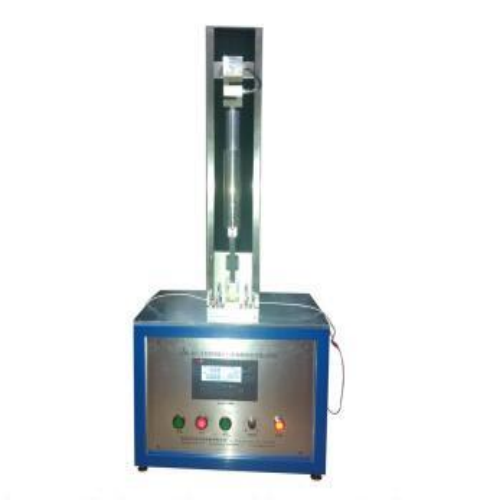
The locomotive cable dynamic cut-through tester is a specialized testing device designed to evaluate the resistance of cables used in locomotives, rail transit, and other related fields against cut-through damage under dynamic impact loading conditions. Its core function is to simulate scenarios where cables may be exposed to sharp objects during installation, operation, or maintenance, such as cutting or puncture, and to test the puncture resistance of the cable sheath or insulation layer.
Main Functions
Dynamic cut-through force testing:
A steel wire indenter with a diameter of φ0.45 mm is used to apply a vertical downward force onto the cable specimen at a constant loading rate of 1 N/s, until the cable is fully penetrated (cut through).
Automatic detection and force holding:
When the cable is cut through, the device can automatically detect the event and retain the maximum cut-through force value for easy recording and analysis.
Multi-unit force display:
Supports switching between three force units: N (Newton), kg (kilogram-force), and lb (pound-force).
Electrical continuity detection:
Some models are equipped with a 24V power supply and a 5 mA triggering current detection circuit. When the indenter penetrates the insulation layer and contacts the conductor, the system automatically triggers a signal and stops the test to ensure accurate results.
Data recording and output:
High-end models are equipped with dedicated software and a computer system, allowing full-process data recording and report generation.
Main Applications
Quality control:
Used by cable manufacturers for factory inspection of cut-through resistance performance in locomotive, rail transit, marine, and other special-purpose cables.
Material research and development:
Helps researchers evaluate the durability of different sheath materials such as PVC and cross-linked polyolefins under dynamic mechanical stress.
Standards compliance testing:
The equipment is typically designed in accordance with industry standards such as Q/QF098-2017. ensuring authoritative and comparable test results.
Safety evaluation:
By simulating extreme conditions such as metal debris scratching or stone compression, it evaluates the electrical safety and mechanical reliability of cables in complex environments.
The locomotive cable dynamic cut-through tester is mainly used to evaluate the ability of cables to resist cut-through damage (i.e., penetration by sharp objects) under dynamic loading conditions. It is widely applied in industries with high requirements for cable safety, abrasion resistance, and cutting resistance. The main application fields are as follows:
Rail transit industry:
This equipment is used to test the cut-through resistance of cable sheaths used in locomotives, EMUs, and metro systems, ensuring electrical insulation safety in complex operating environments. Relevant industry standards, such as “Locomotive and Rolling Stock Cables – Part 1: Power and Control Cables” issued by the National Railway Administration, also provide technical references for such testing.
Automotive industry:
Automotive cables are often exposed to high temperatures, vibration, and mechanical friction in the engine compartment during installation and operation. This tester evaluates the abrasion resistance and cut-through resistance of cable sheaths to ensure stable performance of the electrical system.
Shipbuilding industry:
Marine cables operate in environments with seawater corrosion, mechanical wear, and potential contact with sharp objects. Dynamic cut-through testing is used to verify the durability of cable insulation and sheathing materials.
Industrial automation and robotics:
Industrial cables are frequently subjected to scraping, compression, and mechanical damage risks. This equipment provides reliable test data to support material selection, product design, and quality control.
In addition, the equipment is also widely used by wire and cable manufacturers and third-party testing institutions for product development, factory inspection, and conformity certification.
1. Pre-Test Preparation
Environmental inspection:
Confirm that the laboratory temperature and humidity meet the equipment operating requirements. Ensure there are no strong electromagnetic interference sources or mechanical vibration sources nearby to guarantee data stability.
Equipment inspection:
Check whether the power cables and signal lines are securely connected and undamaged. Inspect the steel platform, φ0.45 mm steel wire indenter, ball screw, and guide rails to ensure they are clean, properly lubricated, and free from wear, damage, or looseness. Verify that the 24V test voltage circuit and 5 mA triggering current detection module are in normal standby condition.
Specimen preparation:
Cut cable specimens according to EN standards. Ensure the surface is smooth, free from mechanical damage and oil contamination, and of sufficient length for proper fixation and vertical loading on the test platform.
2. Specimen Installation and Equipment Setup
Platform fixing:
Place the cable specimen horizontally on the steel test platform. Secure both ends firmly using clamps or pressure plates to prevent slipping or twisting during loading.
Indenter alignment:
Position the φ0.45 mm steel wire indenter directly above the selected test point. Fine-tune the position to ensure the indenter axis is strictly perpendicular to the specimen surface.
Electrical circuit connection:
Connect the 24V test voltage and current detection system. Confirm that when cut-through occurs, the electrical signal can accurately trigger automatic stop and data retention.
3. Parameter Setting and Software Configuration
System startup:
Turn on the main power of the tester, servo motor control system, and dedicated testing software installed on the computer in the correct sequence.
Test parameter input:
Set the loading speed to 1 N/s in the control software. Define the force range according to sample specifications (typically 0–200 N or 12–20 kg). Select force display units (N, kg, or lb) and verify proper switching functionality.
Travel and limit settings:
Adjust upper and lower travel limit rings within a safe testing range. Set limit switch positions to prevent excessive downward movement that could damage the equipment or specimen.
Sensor zeroing:
Perform force sensor zero calibration to eliminate the influence of crosshead weight and fixture preload, ensuring the initial reading is zero.
4. Test Execution and Process Monitoring
Start loading:
Click the “Start” button in the software. The system applies downward vertical pressure at a constant rate of 1 N/s.
Process monitoring:
Monitor the force curve and machine status in real time to ensure uniform loading. Do not touch the specimen or fixtures during the entire test to avoid interference.
Cut-through detection:
When the indenter penetrates the insulation layer and electrical continuity is detected (5 mA triggering current), or when a sudden drop in the force curve occurs, the system automatically identifies “cut-through,” stops loading, and retains the maximum force value.
5. Data Recording and Report Generation
Data reading:
The system automatically locks and displays the peak cut-through force. The operator verifies consistency between the digital display and computer software readings.
Report export:
Export raw test data using the dedicated software, generating a standardized report including test date, sample ID, cut-through force value, unit, and real-time force curve.
Result evaluation:
Compare and analyze the cut-through force data according to relevant locomotive cable standards to determine whether the insulation performance meets production or acceptance requirements.
6. Post-Test Procedures and Maintenance
Specimen removal:
After data recording, raise the crosshead to its initial position, release the clamps, and remove the tested specimen. Clean any residual insulation debris from the platform.
System shutdown:
Exit the testing software, shut down the computer system, and finally turn off the main power supply.
Routine maintenance:
Regularly lubricate transmission components such as the ball screw and guide rails. Inspect the φ0.45 mm steel wire indenter for wear and replace it when necessary (typically 100 spare indenters are provided with the equipment). Maintain detailed operation and maintenance records.
7. Safety Precautions
Strictly follow standard operating procedures. Unauthorized personnel must not modify servo motor control parameters, electrical circuit settings, or software logic.
If abnormal noise, drastic data fluctuation, or mechanical jamming occurs during testing, immediately press the emergency stop button. Resume testing only after troubleshooting and confirming safety.
Force sensors, voltage, and current detection modules must be periodically calibrated by qualified metrology institutions to ensure accurate and reliable test results in compliance with industry standards.
1. Ensuring Operational Safety and Electrical System Reliability
Locomotive cables are the core carriers for traction power supply, control signal transmission, and communication systems in railway vehicles. Under high-speed operation, frequent vibration, and complex track conditions, cables are susceptible to compression from external sharp objects, internal wire friction caused by displacement, or cutting effects from sudden impact loads.
The dynamic cut-through tester enables early identification of structural weak points in cables under dynamic stress. It effectively prevents insulation damage that may lead to short circuits, leakage currents, signal interruption, or electrical fires. By addressing risks at the source, it significantly reduces operational safety hazards and ensures the full lifecycle reliability of railway vehicles.
2. Precise Quantification of Cut-Through Resistance
This equipment adopts a standardized testing procedure. A steel wire indenter (e.g., φ0.45 mm) applies a vertical load at a constant rate (e.g., 1 N/s) until the specimen is cut through, while automatically recording the minimum cut-through force.
Combined with a 24V test voltage and a 5 mA triggering current detection system, the tester accurately determines the electrical conduction point at the moment of penetration, enabling a dual quantitative evaluation of both mechanical failure threshold and electrical safety boundary. With a test range typically up to 0–1000 N, the results are objective and traceable, providing strong data support for material selection, structural design, and process optimization.
3. Highly Realistic Simulation of Dynamic Working Conditions
Traditional static puncture or cutting tests cannot fully reflect the alternating stress, vibration superposition, and instantaneous impact characteristics experienced during locomotive operation.
The dynamic cut-through tester, driven by a servo motor and ball screw system and supported by dedicated testing software, is capable of reproducing real-world loading conditions such as dynamic displacement, continuous vibration, and transient impact.
With automatic force-holding at the cut-through point, the system records complete load–displacement curves and critical failure points, greatly improving the engineering relevance of test data and ensuring strong consistency between laboratory results and real operating environments.
4. Enhancing Quality Control and Standard Compliance
The rail transit industry imposes strict requirements on the mechanical strength, durability, and environmental adaptability of cables. This tester provides automated judgment and data recording functions that comply with multiple national and industry testing standards.
Through batch dynamic cut-through testing, manufacturers can achieve consistent quality control across production lots, quickly identify raw material defects or process deviations, reduce defective products, and improve overall supply chain quality and product compliance.
5. Driving Cable Technology Innovation and Material Development
Long-term accumulation of dynamic cut-through test data provides critical feedback for cable structural optimization and the development of advanced polymer materials.
R&D engineers can analyze test curves to evaluate the performance of sheath thickness, braided layer density, filling structures, and insulation formulations in resisting cut-through damage. This supports the development of next-generation locomotive cables featuring lightweight design, higher wear resistance, and improved resistance to dynamic mechanical damage.
As a key validation tool in material evaluation and product finalization stages, the equipment continuously promotes advancements in railway equipment toward higher speeds, longer service life, and lower maintenance costs.
In summary, the locomotive cable dynamic cut-through tester is not only a critical quality assurance instrument but also a fundamental technical foundation for the safe operation of railway electrical systems. Its core value in precise quantification, realistic simulation, data-driven optimization, and standards compliance provides indispensable support for improving cable reliability, upgrading manufacturing processes, and advancing industry technology.We sincerely welcome your comments or direct inquiries so that we can provide more detailed product information.


