The Multi-Purpose Friction and Wear Tester is a precision physical performance testing instrument primarily designed for the systematic evaluation of the friction characteristics and wear behavior of various materials under highly controlled laboratory conditions. By simulating the mechanical actions that materials experience in actual working environments, the equipment can accurately measure and record key parameters such as the coefficient of friction, wear rate, and wear morphology, thereby providing quantitative scientific data for assessing the tribological performance of materials.This article provides an introduction and detailed explanation of the equipment, aiming to offer researchers, engineers, and technical personnel in related fields a comprehensive and practical reference guide.
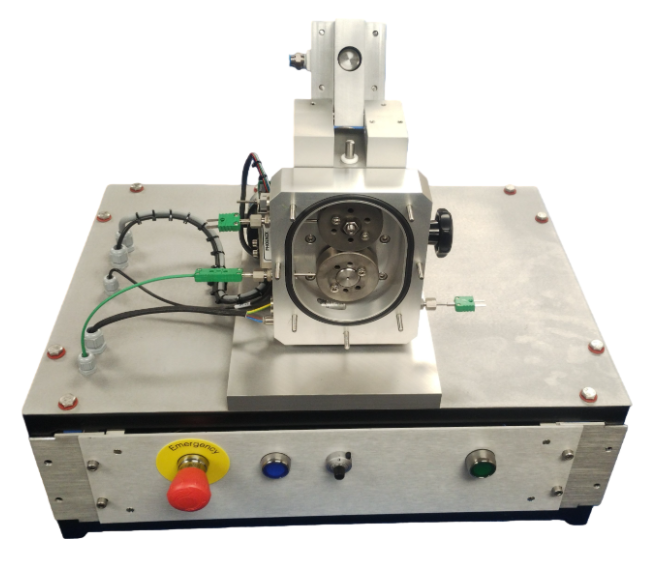
The Multi-Purpose Friction and Wear Tester is a precision instrument used to evaluate the wear resistance, coefficient of friction, lubrication performance, and mechanical behavior of materials under frictional contact conditions. It is widely applied in scientific research, industrial quality control, and new material development.
Multiple Motion Modes
The tester can simulate various friction modes, including rotational, reciprocating, sliding, rolling, and combined friction motions, making it suitable for different real-world operating conditions.
Wide Loading Range
The loading force ranges from milli-Newton (mN) levels to several thousand Newtons (N), meeting testing requirements from micro-scale coatings to heavy-duty mechanical components.
Environmental Simulation Capability
Some advanced models support environmental condition control, including:
High and low temperatures (-50°C to 1000°C)
Vacuum environments
Humidity control
Corrosive media simulation
Compatibility with Various Friction Pair Configurations
The equipment can be configured with multiple friction pair combinations, such as:
Four-ball configuration
Pin-on-disc
Ring-on-block
Twin-roller
Thrust ring systems
Real-Time Data Acquisition
The system can synchronously record key testing parameters, including:
Friction coefficient vs. time curves
Temperature
Load
Wear volume
Wear scar size
Automation and Intelligent Control
Equipped with PLC or computer-based control systems, the tester supports:
Touchscreen operation
Test program storage
Automatic unloading functions
Lubricant Evaluation
Used to evaluate the anti-wear performance of hydraulic oil, gear oil, lubricating oil, and other lubricants during long-term operation.
Material Research and Development
Suitable for testing the wear resistance and friction characteristics of:
Metals
Plastics
Ceramics
Coatings
Composite materials
Industrial Quality Control
Widely used for product reliability verification in industries such as:
Automotive
Aerospace
Petrochemical
Medical devices
Standards Compliance Testing
The equipment complies with multiple domestic and international friction and wear testing standards, including:
GB/T、ASTM、DIN、ISO standards
The Multi-Purpose Friction and Wear Tester is a precision testing device widely used to evaluate the wear resistance, coefficient of friction, and failure mechanisms of materials under different friction conditions. Its applications span multiple industries, including the following:
Material Science and Engineering
Used for the development and optimization of new metals, alloys, ceramics, polymers, and composite materials. It is also applied to evaluate coating adhesion strength and substrate compatibility.
Automotive Industry
Simulates the friction and wear behavior of engine components, transmission systems, brake pads, and other parts under actual operating conditions. It also supports the performance evaluation of lubricating oils and greases as well as material selection.
Aerospace Industry
Used to test the tribological properties of critical components such as bearings, gears, and sealing elements under high-temperature, high-vacuum, or extreme load conditions.
Electronics and Semiconductor Industry
Evaluates the wear resistance and interface stability of microelectronic packaging materials, thin films, and miniature devices.
Medical Device Industry
Applied in wear testing of biomaterials such as artificial joints (hip and knee prostheses) and implants, in compliance with standards such as ISO standards.
Petrochemical Industry
Used to evaluate the anti-wear performance of lubricating oils, hydraulic oils, gear oils, and other fluids, supporting the development of advanced lubricant formulations.
Energy Industry
Includes tribological research for:
Wind power gearbox components
Photovoltaic mounting connectors
Nuclear equipment sealing materials
under complex environmental conditions.
Textile and Light Industry
Used for abrasion resistance testing of flexible materials such as:
Fabrics
Leather
Plastics
in compliance with standards such as ASTM and AATCC.
In addition, this type of equipment is widely used in universities and research institutes for fundamental tribology research, supporting experiments under multiple environmental variables such as temperature, humidity, and atmospheric conditions.
The Multi-Purpose Friction and Wear Tester is a precision instrument used to evaluate the friction and wear performance of materials, coatings, lubricants, and other substances under various operating conditions. According to the latest publicly available information, its technical features can be summarized as follows:
Multi-motion mode support:
Capable of performing various motion forms such as rotational, reciprocating, sliding, rolling, and composite friction movements.
Multi-environment adaptability:
Some models are equipped with environmental control modules such as high/low temperature (-30°C to 1000°C), vacuum, humidity, and corrosive environments.
Compatibility with multiple friction pairs:
Supports various configurations including four-ball, pin-on-disc, thrust ring, block-on-ring, and two-roller systems, enabling simulation of different materials and working conditions.
Lubricant evaluation capability:
Specifically designed for assessing the long-term anti-wear performance of lubricants such as lubricating oils, greases, hydraulic oils, and gear oils.
Load range:
High-end models can cover a range from 1 mN to 2000 N.
Speed range:
Spindle rotational speed up to 0.1–5000 rpm; reciprocating frequency from 0.1–60 Hz.
Displacement control accuracy:
Lateral/vertical resolution can reach 0.25–0.5 μm.
Friction torque measurement:
Maximum measurable torque up to 2.5 N·m, with an accuracy of ≤ ±1%.
Temperature control:
Standard range from room temperature to 150°C, with some models supporting -180°C to 1200°C.
Modular design:
Drive modules, friction pairs, and environmental chambers can be quickly replaced, significantly improving testing flexibility.
Intelligent recognition system:
Automatically identifies sensors and equipment configurations and loads calibration data.
Automated control and data acquisition:
Controlled via PLC or computer systems, enabling automatic operation and real-time recording of curves such as friction coefficient vs. time, temperature vs. time, and friction force vs. time. Data can be exported via USB for further analysis.
Multi-station and high-throughput capability:
Some models support 4–9 testing stations, making them suitable for batch sample testing.
The operating procedure of a Multi-Purpose Friction and Wear Tester may vary slightly depending on the specific model and configuration, but the core steps are largely consistent. A typical workflow is outlined below:
Inspect the equipment for any visible damage and ensure all components are intact. Confirm that the power supply, air source (if applicable), and cooling system (if required) are functioning properly.
Clean the specimen fixtures, friction pairs (such as pin-on-disc, four-ball, block-on-ring, etc.), and the workbench surface.
Prepare the test specimens according to relevant standards (e.g., ISO, ASTM, GB/T), ensuring that dimensions and surface roughness meet the required specifications.
2. Specimen Installation
Mount the upper specimen onto the main spindle chuck, typically secured using a tapered fit and locking rod.
Fix the lower specimen onto the counterface disk or specimen holder, ensuring proper alignment and firm installation.
For high-temperature or lubricated tests, install the heating system or lubricant supply system in advance.
3. Parameter Setting
Set the test parameters via the control interface (usually a 7-inch color touchscreen or PLC + computer system), including:
Test load: typically 0–1000 N, applied via weights, pneumatic, or motor-driven loading systems.
Motion mode: linear reciprocating (speed 1–400 mm/min) or rotational (speed 1–3000 r/min).
Test duration or number of cycles/strokes.
Environmental conditions: if heating is required, set the target temperature (room temperature to 150°C or higher).
Zero the sensors for friction force, load, and other measurement channels.
4. Start of Test
Activate the automatic loading system to stabilize the test load at the preset value.
Press the “Start” button to begin the test operation.
Monitor real-time data such as friction coefficient, temperature, and wear behavior (some systems provide live curve display on-screen).
5. Test Completion and Data Processing
After the test is completed, the system will automatically unload or can be manually set to “Unload.”
Once the spindle comes to a complete stop, lower the guide shaft and remove the specimen.
Export data via USB or software, typically in formats such as Excel, Word, or TXT.
Analyze wear scar morphology, mass loss, and friction coefficient curves to evaluate the wear resistance of the material.
6. Shutdown and Maintenance
Turn off the power supply and computer system.
Clean the equipment and apply anti-rust oil to moving components such as guide rails and bearings.
Regularly calibrate sensors and inspect the sealing condition of air or oil circuits.
Personal protection: Operators should wear protective goggles and gloves to avoid contact with high-speed rotating or high-temperature components.
Environmental requirements: The equipment should be placed in a stable environment free from strong vibration and corrosive gases.
The importance of the Multi-Purpose Friction and Wear Tester is primarily reflected in its critical role in materials research and development, quality control, and industrial applications. Its core value can be summarized as follows:
Broad Applicability
The equipment is capable of simulating various motion modes such as rotational, reciprocating, and block-on-ring friction, as well as complex environmental conditions including high/low temperature, vacuum, and corrosive atmospheres. It is widely applicable across multiple industries, including materials science, automotive, aerospace, electronics, medical devices, and petrochemical engineering.
Accurate Performance Evaluation
By measuring key parameters such as friction coefficient, mass loss, and wear rate, the tester provides reliable data support for evaluating the wear resistance, lubricity, and coating adhesion strength of new materials.
Support for Product Development and Optimization
In the development of lubricants such as lubricating oils, hydraulic oils, and gear oils, the equipment is used to assess long-term anti-wear performance, enabling the development of more efficient and durable lubricant products.
Compliance with International Standards
The design of the equipment typically follows major international standards such as ISO, ASTM, and GB, ensuring the authority, reliability, and comparability of test results.
Improved Industrial Reliability
By simulating real operating conditions, the tester helps predict the performance of materials or components in actual service environments, thereby reducing failure risks and extending equipment service life.
In summary, the Multi-Purpose Friction and Wear Tester is not only a key experimental instrument in fundamental materials research, but also an important bridge between theoretical studies and practical engineering applications. By accurately simulating friction and wear behaviors under complex working conditions, it provides reliable data support for material performance evaluation, product design optimization, and process improvement. As a result, it plays an irreplaceable role in driving technological innovation, improving product quality, and ensuring industrial safety.We sincerely welcome experts, industry professionals, and potential users to leave messages or contact us directly, so that we can provide more detailed product information, technical solutions, and customized service support according to your specific needs.


