A High Temperature Tribometer is a precision experimental instrument specifically designed to evaluate the tribological performance of materials under extreme high-temperature conditions. The device is capable of accurately simulating the complex environments that materials experience in real-world applications, including continuous high-temperature exposure, varying mechanical loads, and different types of relative motion such as sliding, rolling, or combined motion.Through such simulations, researchers can systematically and accurately assess key tribological properties of materials at elevated temperatures, including:Dynamic and static coefficients of friction;Wear rate under specific conditions;Long-term wear resistance;Surface damage mechanisms.These evaluations provide critical experimental data and theoretical support for the selection of high-temperature engineering materials, optimization of surface treatment processes, and life prediction of mechanical components.
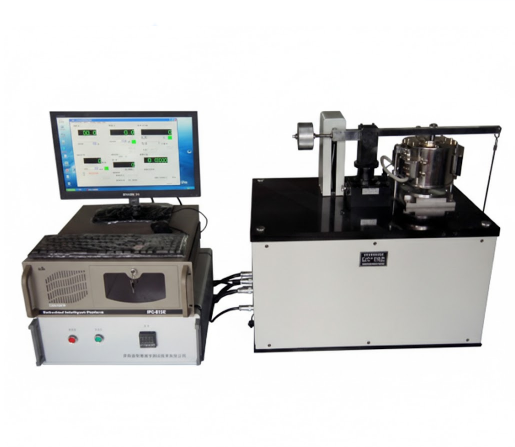
The development of the High Temperature Tribometer is primarily driven by the growing demand in modern industry for precise measurement of tribological behavior (such as friction, wear, and lubrication) under extreme high-temperature conditions.
With technological advancements in industries such as aerospace, energy, and automotive engineering, traditional tribological studies conducted at room or moderate temperatures are no longer sufficient to meet real-world engineering requirements.
Applications such as:
Turbine blades in aircraft engines (operating temperatures exceeding 1000°C)
Gas turbines
Brake systems
Precision glass forming processes
all involve high-temperature contact interfaces, requiring accurate evaluation of material wear resistance and stability under elevated temperatures.
At temperatures above 300–350°C, organic base oils and polymer lubricants tend to decompose and oxidize. As a result, systems must rely on solid lubricants or dry friction conditions, which has driven the development of testing equipment capable of simulating such environments.
Materials such as semiconductors, alloys, and ceramics exhibit significant changes in mechanical properties at high temperatures, including:
Thermal expansion
Phase transformation
Creep behavior
Reliable data must therefore be obtained through controlled high-temperature tribological testing.
To ensure equipment safety and service life, there is an urgent need to establish repeatable and quantifiable evaluation methods for high-temperature tribological performance, which has further promoted the development and refinement of dedicated high-temperature tribometers.
Key Points in Technological Evolution3
Expanded Temperature Range:
From early ranges of 200–500°C to 1000°C or even 1200°C (e.g., DN 55 tribometer).
Enhanced Environmental Control:
Integration of inert gas atmospheres or vacuum systems to prevent oxidation from affecting test results.
Multi-Parameter Synchronous Measurement:
Real-time monitoring of key parameters such as friction coefficient, wear rate, contact resistance, and temperature distribution.
Application-Specific Structural Design:
Development of specialized high-temperature tribometers tailored for specific conditions such as fretting, sliding, and erosion.
In summary, the development of the High Temperature Tribometer is the result of the combined evolution of materials science, engineering applications, and testing technologies. It is specifically designed to address the complex challenges of tribological behavior under extreme environmental conditions.
The primary function of a High Temperature Tribometer is to evaluate key tribological parameters of materials under real high-temperature conditions, including the coefficient of friction, wear rate, lubrication performance, and durability.
The instrument is widely used to assess the high-temperature tribological behavior of materials such as high-temperature alloys, ceramics, and coatings in industries including:
Aerospace (e.g., jet engine blades)
Energy (e.g., gas turbines)
Automotive (e.g., brake pads, piston rings)
It is used to evaluate the high-temperature stability of advanced materials such as MAX phase coatings.
For example, studies have shown that Cr₂AlC-based coatings, after vanadium solid-solution strengthening, exhibit significantly reduced friction coefficient and wear rate at 900°C.
The tribometer can simulate real operating environments by conducting tests in:
Air
Vacuum
Inert gas
Liquid environments
It complies with international standards such as:
DIN 50324
ASTM G99
ASTM G133
Some advanced models (e.g., CSM THT tribometer from Switzerland) can operate stably at temperatures up to 1000°C, and are equipped with:
Precise temperature control systems
Automatic protection mechanisms
The instrument is particularly suitable for evaluating the high-temperature performance of:
Lubricants
Solid lubricant coatings
Self-lubricating materials
Especially under conditions such as:
Dry friction
Boundary lubrication
Mixed lubrication
A High Temperature Tribometer is used to simulate the relative motion of material friction pairs (such as pin-on-disk, ball-on-disk, etc.) under high-temperature conditions, in order to measure key performance parameters such as the coefficient of friction and wear rate.
Its measurement principle integrates high-temperature environment simulation, precise load control, motion drive systems, and multi-parameter synchronous data acquisition technologies.
The instrument operates under controlled high-temperature conditions (typically up to 800°C to 1200°C) and specific atmospheres (air, vacuum, or inert gas), allowing the specimen and counterface to undergo sliding or fretting motion.
Friction Force: Measured in real time using high-precision force sensors (e.g., LVDT).
Coefficient of Friction (COF): Calculated as the ratio of friction force to normal load.
Wear Volume / Wear Rate: Quantified using techniques such as:
3D surface profilometry
Scanning Electron Microscopy (SEM)
Digital Holographic Microscopy (DHM)
Temperature, Speed, and Load: Controlled via corresponding sensors in a closed-loop system and recorded simultaneously.
Machine the material into standard shapes (e.g., pin or disk specimens);
Polish the surface to a roughness of Ra < 0.1 μm;
Install the specimen into the friction pair fixture inside the high-temperature chamber.
Activate the heating system (e.g., electromagnetic induction, المقاومة heating, or infrared heating) and raise the temperature to the target value (e.g., 1000°C);
Select the testing atmosphere according to requirements:
Vacuum (as low as 10⁻⁷ mbar)
Protective gas (argon or nitrogen)
Air
Drive the specimen using the spindle at a set rotational speed (e.g., 0.3–600 rpm), or perform reciprocating motion:
Amplitude: 10 μm – 20 mm
Frequency: up to 200 Hz
Apply a constant normal load (1 N to 2000 N, depending on the equipment model).
Some systems integrate Digital Holographic Microscopy (DHM), enabling real-time acquisition of wear morphology at each rotation with nanometer-level resolution;
Additional analytical techniques may include:
Scanning Electron Microscopy (SEM)
Raman spectroscopy
High-speed imaging
These tools help analyze wear mechanisms in detail.
Real-time output of curves such as:
Coefficient of friction vs. time
Temperature vs. time
Wear depth vs. number of cycles
After testing, wear volume is precisely measured using a 3D profilometer (e.g., Keyence VR-3000).
A High Temperature Tribometer is a critical instrument used to simulate and measure friction, wear, and lubrication performance of materials under high-temperature conditions. It plays an irreplaceable role in the research, development, and upgrading of multiple high-tech and heavy industries. Its importance is reflected in the following aspects:
Aerospace
Key components such as turbine blades and combustion chambers in aircraft engines must operate reliably at temperatures exceeding 1000°C for extended periods. High temperature tribometers are essential for evaluating the wear resistance of coatings and alloy materials, ensuring flight safety and efficiency.
Energy and Power
Moving components in gas turbines, nuclear reactors, and supercritical CO₂ systems are exposed to extreme temperature and pressure conditions. High-temperature tribological data is crucial for optimizing material selection and predicting service life.
Automotive Manufacturing
The performance validation of high-temperature friction components such as brake systems and piston rings depends heavily on this equipment. Demand is rapidly increasing, especially in thermal management systems for new energy vehicles.
Development of High-Temperature Materials
By precisely controlling parameters such as temperature (up to 1200°C), load, and sliding speed, high temperature tribometers accelerate the screening and optimization of advanced materials, including ceramics, intermetallic compounds, and composites.
Friction Reduction and Lubrication Technologies
The equipment supports testing under various conditions, including dry friction, oil lubrication, and solid lubrication, facilitating the development of low-emission and high-efficiency lubrication systems aligned with carbon neutrality goals.
Adaptation to Intelligent Manufacturing
Modern high temperature tribometers integrate automation, real-time data analysis, and AI-based prediction capabilities, enabling a transition from trial-and-error approaches to data-driven R&D methodologies.
Standardized Testing
Compliance with international standards such as ASTM, ISO, and GB ensures the comparability and reliability of test results, supporting quality certification and export compliance.
Failure Mechanism Analysis
By combining with microscopic analysis techniques such as Scanning Electron Microscopy (SEM) and Energy Dispersive Spectroscopy (EDS), the instrument helps reveal wear mechanisms such as adhesion, oxidation, and abrasion at high temperatures, guiding product design improvements.
Long-Term Life Evaluation
The equipment supports continuous operation for thousands of hours, simulating real service conditions and enabling early identification of potential failure risks.
Although the high-end market is still dominated by manufacturers from Germany (e.g., the Optimal SRV series) and Switzerland, domestic manufacturers (such as Jinan Hengxu and Jinan Lianggong) have developed equipment capable of operating in the 1000°C–1200°C range. Progress has also been made in areas such as closed-loop control and multi-contact configuration adaptability.
The localization of high temperature tribometers helps reduce research and industrial costs while enhancing the resilience of the supply chain.
In summary, high temperature tribological testing instruments are not only core experimental tools for fundamental research and engineering applications in tribology, but also essential infrastructure and key technological support platforms for the high-quality development of strategic emerging industries such as aerospace, advanced energy, and high-end equipment manufacturing.As modern industrial technologies continue to evolve toward extreme operating conditions, higher performance requirements, and increased intelligence and precision, the role of high temperature tribometers in material development, process optimization, and equipment reliability evaluation will become increasingly critical. Their strategic importance and technological demand will continue to grow significantly.


