Double-Head Abrasion Tester is a precision laboratory instrument designed to accurately evaluate the surface wear resistance of various materials. By simulating the wear that materials experience during actual use or under frictional conditions, it provides scientific and quantitative measurements of their abrasion resistance. This enables critical support for material performance optimization and quality control. The device is widely applied across coatings, textiles, plastics, synthetic leather, natural leather, carpets, automotive interior materials, metal surface coatings, and various composite materials. It serves as an essential tool in industrial research and development, quality inspection, and standards certification.
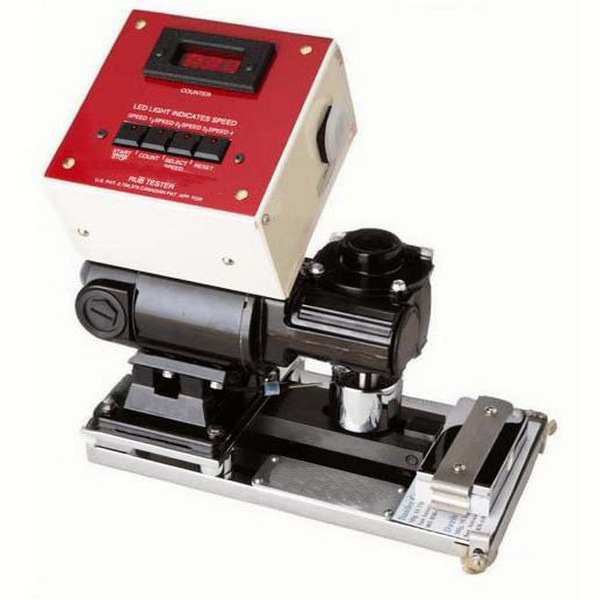
The development of the Double-Head Abrasion Tester stems from the industrial demand for standardized assessment of material wear resistance, particularly in textiles, carpets, plastics, leather, and coatings. As industrial production increasingly required precise evaluation of abrasion performance, standardized testing equipment became indispensable. Single-head testing methods were insufficient for simulating wear across different materials and application scenarios. Therefore, there was a need for a testing device that is structurally stable, highly repeatable, and capable of simultaneously comparing two samples or testing conditions.
The Double-Head Abrasion Tester emerged to meet this need and became the standard device for evaluating abrasion resistance across multiple industries, including textiles, carpets, clothing, and industrial fabrics. Its core drivers include:
Industry Standardization Needs: Since the mid-20th century, organizations such as ASTM (American Society for Testing and Materials) and ISO (International Organization for Standardization) have promoted unified abrasion testing methods. For example, ASTM D3884-09 explicitly specifies the "Rotary Platform Double-Head (RPDH)" method as a standard procedure for textile abrasion testing.
Improved Testing Efficiency and Consistency: The double-head design allows simultaneous testing of two samples (either identical or different materials), effectively reducing errors caused by equipment fluctuations or environmental changes, and enhancing comparability of results.
Simulation of Realistic Wear Conditions: With a rotary platform and dual abrasion heads, the tester can simulate friction, scratching, and other wear phenomena under controlled pressure (e.g., 9–12 kPa), providing a more accurate assessment of material durability.
Wide Industrial Applications: Beyond textiles, this equipment is incorporated into abrasion testing standards in automotive, construction, rubber, and other industries (ISO, TAPPI, DIN), evaluating the long-term performance of coatings, leather, plastics, and other materials.
From a technological perspective, early abrasion tests relied on single-head devices, which suffered from high sample variability and long testing cycles. The double-head structure matured in the 1980s–1990s and became central to standards such as ASTM D3884. Modern double-head testers further integrate digital control, vacuum debris collection, and automatic counting, significantly improving testing precision and automation.
In summary, the development of the Double-Head Abrasion Tester not only meets the industrial need for standardized quality control but also aligns with the growing demand for multi-material abrasion evaluation and continuous improvement in testing technology, establishing it as a benchmark in the field of abrasion testing.
The Double-Head Abrasion Tester functions by simulating material wear under controlled conditions using a rotary platform and dual abrasion heads, producing reliable data on material abrasion resistance. The standard procedure includes:
Cut test materials to standard dimensions (typically circular, 100–140 mm in diameter).
Condition samples under controlled temperature and humidity as required (e.g., textiles or carpets in 20°C ±2°C and 65% ±4% RH for at least 24 hours) to ensure test consistency.
Inspect abrasion wheels (e.g., CS-10. H18) for cleanliness and wear; replace if necessary.
Install wheels on the holder and apply standard load using weights (commonly 500 g or 1000 g, per ASTM D4966 or ASTM D3884).
Set the rotary platform speed (typically 60–72 rpm) and configure the number of cycles or endpoint conditions (e.g., weight loss threshold or hole formation).
Secure the sample at the center of the rotary platform, ensuring it is flat and free of wrinkles.
Use high-viscosity adhesive or vacuum fixation to prevent movement during testing.
Initiate the device; the platform rotates, and abrasion wheels move relative to the sample surface, creating a circular wear pattern.
Modern testers often include vacuum collection systems to remove debris in real time, ensuring accurate results.
Testing automatically stops upon reaching preset cycles or endpoint conditions.
Evaluation methods include:
Weight Loss Method: Weigh samples before and after testing to calculate material loss.
Appearance Assessment: Compare with standard references to evaluate pilling, holes, fading, etc.
Key Considerations:
Wheel Selection: Match wheels to the material type (e.g., CS-10 for carpets, H18 for coatings).
Load Consistency: Ensure correct combination of weights and pressure sleeves; applied pressure should match the labeled weight.
Environmental Control: Fluctuations in temperature and humidity affect results; tests are recommended in controlled laboratory conditions.
Repeatability: Test at least three parallel samples per group and use the average to improve data reliability.
By following standardized operation procedures and strict control measures, the Double-Head Abrasion Tester provides accurate and reliable assessments of material wear resistance, supporting product development, quality control, and industry standardization. Its high-precision data assists companies in optimizing material selection and design, enhancing product durability and service life.
To ensure long-term stability and accuracy, proper maintenance of the Double-Head Abrasion Tester is essential:
After each test, thoroughly clean the testing platform, abrasion wheels, and clamps to remove residual abrasive or sample debris, ensuring repeatable and reliable results.
Disposable Abrasives: Replace after each set of samples to maintain consistent wear conditions.
Permanent Abrasives (e.g., hardened metal wheels): Regularly inspect for wear, and replace or recalibrate as needed.
Regularly verify critical parameters: platform speed (typically 60 rpm or per standard), weight of applied loads, and counter accuracy to ensure compliance with relevant standards.
Lubricate moving components (bearings, drive mechanisms) according to manufacturer recommendations to prevent speed fluctuations or mechanical wear, extending equipment lifespan.
Proper cleaning, abrasive management, calibration, and lubrication ensure that the double-head abrasion tester maintains high precision and stability over time, providing reliable support for evaluating the wear resistance of textiles, coatings, plastics, carpets, and other materials.
As a highly precise testing instrument, the Double-Head Abrasion Tester plays a critical and irreplaceable role in material science, product quality control, and industrial manufacturing. By systematically analyzing its technical background, industry demand, and the evolution from concept to mature technology, alongside standardized operating procedures and careful maintenance practices, users can gain a comprehensive understanding of the instrument’s design principles, operational mechanisms, and performance boundaries.This knowledge translates directly into higher efficiency and reliability in practical applications, ensuring that the advanced functions and potential of the tester are fully leveraged in research and production. Ultimately, it drives industry standards forward and contributes to overall improvements in product quality.


