The Chemical Mechanical Polisher (CMP) is a critical piece of equipment in ultra-precision manufacturing fields such as semiconductor fabrication. Its core function is to achieve ultra-precise planarization of silicon wafers, single-crystal silicon, or other substrate materials by combining chemical etching and mechanical polishing.
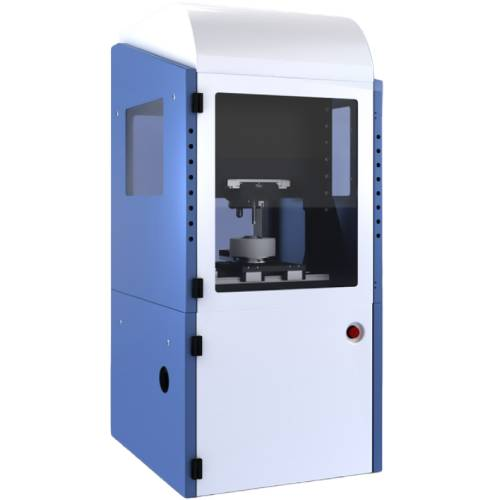
Chemical mechanical polishing has become one of the core processes in semiconductor manufacturing, with its evolution closely linked to industrial advancements. By synergistically combining chemical corrosion and mechanical abrasion, CMP enables material removal and global planarization at the atomic scale, making it a key step for pushing the limits of advanced semiconductor processes.
CMP, as a critical ultra-precision surface treatment, was first conceptualized in 1965. primarily for optical glass manufacturing to achieve high-quality optical surfaces. With the rise of the semiconductor industry, CMP was gradually integrated into integrated circuit fabrication, evolving alongside major changes in semiconductor materials and processes.
In the early stages of semiconductor manufacturing, polishing relied on purely mechanical methods, often using hard abrasives such as aluminum oxide for surface grinding. As semiconductor substrates shifted from germanium to silicon, and integrated circuits evolved toward higher density and finer features, the requirements for surface flatness and defect control increased. This drove extensive research into polishing abrasives. Silica (SiO₂) gradually replaced alumina due to its optimal balance of chemical stability and mechanical properties.
In 1983. IBM achieved significant breakthroughs in copper processing and wafer planarization, collaborating with equipment suppliers to develop preliminary CMP processes, laying the foundation for standardization. By 1985. colloidal silica abrasives made from high-purity organic precursors were introduced, greatly improving polishing consistency and reliability—a major milestone. In 1994. the industry launched the first integrated CMP equipment combining polishing and cleaning, marking the maturity of CMP for large-scale industrial application.
CMP relies on the synergistic action of chemical and mechanical mechanisms. During polishing, chemical reagents in the slurry react with the wafer surface, forming a soft, easily removable layer. Concurrently, polishing pads carrying abrasive particles mechanically remove this layer under applied pressure. The combination of these mechanisms achieves nanometer-scale surface planarization.
Key metrics for evaluating CMP performance include:
Surface quality: Roughness and global flatness.
Material removal rate (MRR): The speed at which material is removed.
Process parameters include:
Pad characteristics: Material, porosity, and structure.
Pressure and motion: Applied downforce, relative rotation speed between wafer and pad, and radial oscillation.
Slurry properties: Chemical composition, concentration, flow rate, and delivery method.
Modern CMP slurries are multi-component systems containing oxidizers, pH regulators, corrosion inhibitors, surfactants, complexing agents, chelators, and nanoscale abrasive particles. The types and concentrations of chemical additives critically affect removal selectivity, surface quality, and defect control.
As semiconductor manufacturing advances toward miniaturization, high density, and 3D integration, CMP becomes increasingly indispensable.
Logic chips: Shrinking process nodes have significantly increased CMP steps. For instance, advanced 7 nm processes may require ~30 polishing steps, while mature 90 nm processes need ~12. resulting in exponential growth in polishing pad and slurry consumption.
Memory chips: Transition from 2D NAND to 3D NAND has complicated CMP processes. 3D NAND, with stacked memory layers, increases CMP steps from ~7 (2D) to ~15. Increased use of tungsten and other interconnect materials also drives demand for specialized slurries.
Compared to purely mechanical or chemical polishing, CMP offers:
Reduced removal rate disparity across materials of different hardness.
Minimized surface damage and micro-scratches compared to mechanical polishing.
Better global planarization compared to chemical-only polishing.
Beyond semiconductors, CMP’s high precision, efficiency, low damage, and process stability have enabled its use in aerospace, defense, new energy vehicles, 5G, IoT, AI, and other high-end manufacturing applications for ultra-precision surface processing of critical components.
The CMP equipment enables global planarization of wafer surfaces, achieving atomic-level flatness. Modern CMP systems are highly automated, and a typical operational sequence includes:
Wafer loading: Wafers are vacuum-mounted on the polishing head to prevent displacement during polishing.
Slurry supply: Pre-formulated CMP slurry, containing nanoscale abrasives and specific chemical reagents, is continuously and uniformly delivered onto the high-speed rotating pad, forming a stable polishing layer.
Pressure and motion control: The polishing head applies preset downforce (typically a few to tens of psi) onto the pad. The wafer and pad rotate synchronously and may perform radial oscillations to ensure uniform material removal.
Chemical-mechanical interaction: Chemical oxidizers react with surface materials (e.g., copper, silicon dioxide) to form a softened or modified layer. Abrasive particles in the slurry mechanically remove this layer, enabling precise, controlled material removal.
Endpoint detection: Optical interferometry, motor current, or conductivity measurements monitor wafer thickness in real time. Polishing automatically stops when the target thickness is achieved, preventing over-polishing or under-polishing.
Post-polish cleaning: Wafers are immediately transferred to multi-stage cleaning modules to remove residual particles and chemicals, achieving “dry-in, dry-out” high cleanliness standards.
Originally developed for integrated circuit manufacturing, CMP has expanded to a variety of ultra-precision material processing applications:
Semiconductors: Critical for multiple processes, including STI CMP (shallow trench isolation), ILD CMP (interlayer dielectric planarization), Cu CMP (Damascene copper removal), W CMP, Poly CMP, and HKMG CMP—especially essential at 28 nm nodes and below.
Advanced packaging and 3D integration: Planarization of through-silicon vias (TSVs) for high-density interconnects.
Non-silicon substrates: Rough and fine polishing of SiC, GaN, and other wide-bandgap semiconductors, often using specialized slurries with diamond abrasives.
Other precision surfaces: Ultra-precision polishing of optical components (diamond, sapphire) to sub-nanometer roughness, as well as high-quality planarization of HDDs and MEMS devices.
In conclusion, CMP technology continues to advance in tandem with market demand, with expanding applications and strong growth potential. Its combination of technological innovation, industrial necessity, and broad applicability underscores a promising future for chemical mechanical polishing equipment.


