The Load-Controlled Friction and Wear Tester is a precision instrument used to evaluate the tribological performance of materials under controlled normal loads. Its key feature is the ability to apply and maintain a constant or programmable normal load, simulating the contact pressure in real working conditions, and thereby quantifying material behavior under sliding, rolling, or combined friction modes.
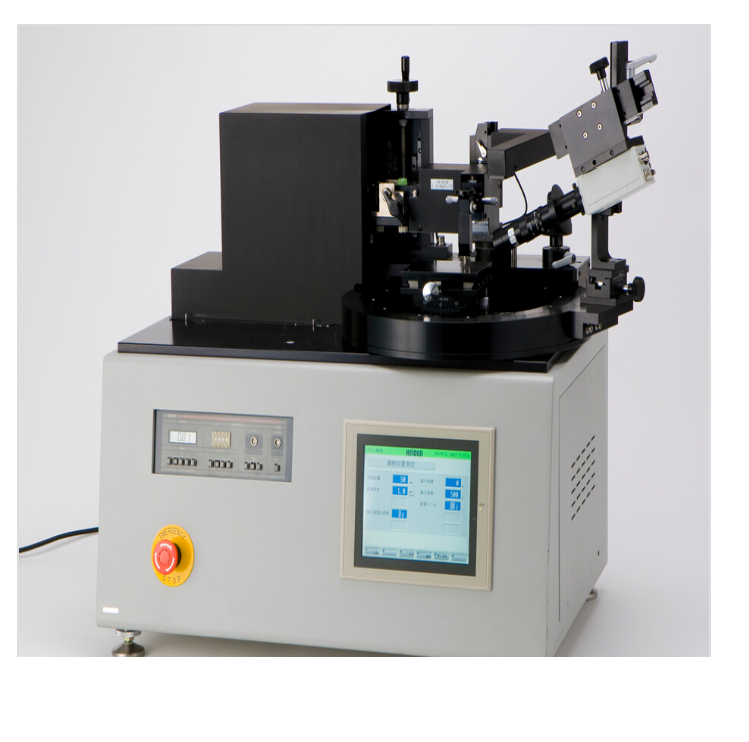
The main function of the Load-Controlled Friction and Wear Tester is to simulate sliding, rolling, or combined friction motions under fixed or variable normal loads, in order to quantify material wear resistance and the effectiveness of lubricants.
Precise Load Control: Achieved through pneumatic, servo motor, or weight-based systems. Some models support dynamic load variations (e.g., sine wave or triangular wave loading).
Multiple Motion Modes: Supports sliding, rolling, reciprocating, or combined rolling-sliding motions to simulate real working conditions.
Environmental Parameter Control: Temperature (room temperature up to 200°C or higher), humidity, and lubrication conditions (dry, boundary lubrication, or fluid lubrication) can be controlled.
Multi-Parameter Real-Time Measurement:
Friction force / coefficient of friction
Wear volume (measured via displacement sensors, mass loss, or optical scanning)
Rotational speed, time, contact temperature, etc.
Automation and Data Acquisition: Computer-controlled system for automatic test execution, real-time data acquisition, and report generation.
Material Screening and R&D: Evaluates wear resistance of metals, plastics, coatings, and composites to guide the development of new materials.
Lubricant Performance Evaluation: Tests the extreme pressure, wear resistance, load-bearing capacity, and thermal stability of oils and greases.
Quality Control and Standards Compliance: Conducts product certification and factory inspection according to ASTM, ISO, SH/T standards.
Failure Analysis and Life Prediction: Simulates extreme conditions (high speed, heavy load, high temperature) to analyze failure mechanisms and predict component service life.
The Load-Controlled Friction and Wear Tester works by precisely applying and adjusting a normal load to simulate real contact stresses while measuring key parameters such as friction force and wear.
Load Control Mechanism: A loading system (weights, hydraulic, or electric actuator) applies a constant or programmable normal load (P) to the friction pair (e.g., ring-block, ball-disk, four-ball). Load magnitude can be accurately set and monitored in real time.
Relative Motion Simulation: One specimen (e.g., test ring or disk) is driven to rotate or reciprocate, while the other specimen (e.g., block or steel ball) maintains contact under load, forming sliding or rolling friction pairs.
Friction Force Measurement: Tangential friction force (F) is measured by a friction sensor in real time, and the coefficient of friction is calculated as μ = F / P.
Wear Quantification: Wear is measured before and after testing via mass loss, laser displacement, or optical microscopy to assess material wear resistance.
Multi-Parameter Synchronized Control: Speed, temperature, time, and environmental medium (dry or lubricated) can be controlled simultaneously to simulate complex working conditions.
Automation and Data Acquisition: The computer-controlled system executes the test automatically, records multiple channels of data in real time, and generates reports.
Preparation
Ensure the device is connected to a 220V power supply and placed in a safe environment.
Select and clean friction pairs according to the test standard (e.g., ASTM D2783. D4172. ISO 20623).
For lubricant testing, fill the oil bath to submerge the friction wheel by 3–5 mm.
Specimen and Load Installation
Secure the upper specimen (e.g., cylindrical block or steel ball) in the lever or fixture.
Install the lower specimen (e.g., disk or wheel) and ensure proper alignment.
Set the initial load (via weights or electric actuator), typically 0–100 N or higher.
Parameter Settings
Sliding speed: 1–400 mm/min or rotational speed
Test duration or cycle count
Temperature: -10°C to 200°C (if equipped with temperature control module)
For load-controlled devices, ensure the load is constant or incremented according to the program.
Test Execution
Start the drive system to move the friction pair.
If using step-loading (e.g., in wear testing), increase the weight by 0.5 kg at 2–5 second intervals until stick-slip or seizure occurs; record the maximum weight applied.
The system automatically records friction force, coefficient of friction, and wear data.
Completion and Post-Processing
Turn off the power after the test.
Remove the specimens and measure wear scar diameter, depth, or area using an optical microscope or profilometer.
For lubricants, better anti-wear performance corresponds to smaller wear scars and higher surface smoothness.
Data Recording and Analysis
Export data via USB or software interface to generate friction coefficient vs. time curves and wear rate metrics.
Multiple test types (e.g., four-ball method + temperature module) can be combined for comprehensive evaluation.
Precautions
Load Accuracy: Ensure the loading system is calibrated to prevent specimen damage.
Environmental Control: Maintain humidity at 30–70% RH and temperature at 10–40°C to avoid condensation.
Cleaning and Maintenance: Clean friction pairs and oil bath after each test to prevent contamination.
Cleaning and Dust Control: Remove debris, oil, or foreign matter from friction pairs, fixtures, and load platforms. Keep the device and environment clean.
Lubrication System Check: Regularly lubricate moving parts (guides, screws, bearings). Inspect oil bath levels and replace contaminated oil.
Sensor and Load Calibration: Periodically calibrate load sensors, friction sensors, displacement, and speed encoders (recommended every 6–12 months). Record calibration data.
Temperature and Environment Control: Verify uniformity and stability of temperature-controlled modules (±2°C), and check gas or vacuum systems if applicable.
Friction Pair and Fixture Inspection: Inspect steel balls, pins, disks for scratches, dents, or deformation; replace per standards (e.g., ASTM D4172).
Software and Data System Maintenance: Backup data, update software, check communication interfaces.
Vibration and Structural Inspection: If abnormal vibration occurs, consider damping or reinforcing the structure to ensure test accuracy.
In conclusion,the Load-Controlled Friction and Wear Tester is trending towards intelligence, high precision, and multifunctionality. Future devices will integrate advanced sensors and real-time data acquisition systems for dynamic and accurate monitoring of friction coefficients and wear rates. Test conditions will cover broader ranges of temperature, load, and speed to simulate extreme working conditions. Integration with high-resolution imaging will enable online wear morphology analysis, providing comprehensive performance evaluation for materials and lubricants.


