Leather, as a historically significant and widely used material, is present in clothing, footwear, furniture, automotive interiors, and almost every aspect of daily life. However, leather must not only be aesthetically pleasing and durable but also maintain color stability during use. Otherwise, it may easily fade or transfer color under conditions such as friction, sweat, and wear, potentially staining other contacted materials. Color migration or fading on the leather surface affects not only the product’s appearance but also the consumer experience and quality evaluation of the product.
In the color fastness evaluation system, rubbing fastness is a key indicator, reflecting whether the color of leather easily fades or transfers to other materials upon friction. Consequently, a specialized Leather Rubbing Fastness Tester has become an important laboratory instrument for quality control, product development, and certification in the leather industry.
Rubbing fastness measures a dyed material’s ability to resist color loss or transfer under mechanical action such as rubbing, friction, or wiping. High color fastness indicates that the material is less likely to fade or stain other surfaces during prolonged wear or use.
Leather rubbing fastness is generally evaluated under two conditions:
Dry rubbing fastness: Tests the effect of friction on leather color under dry conditions.
Wet rubbing fastness: Uses a moistened friction pad to simulate conditions such as sweat or other moisture exposure.
A complete rubbing fastness test can assess leather color performance under both conditions, reflecting practical usage scenarios.
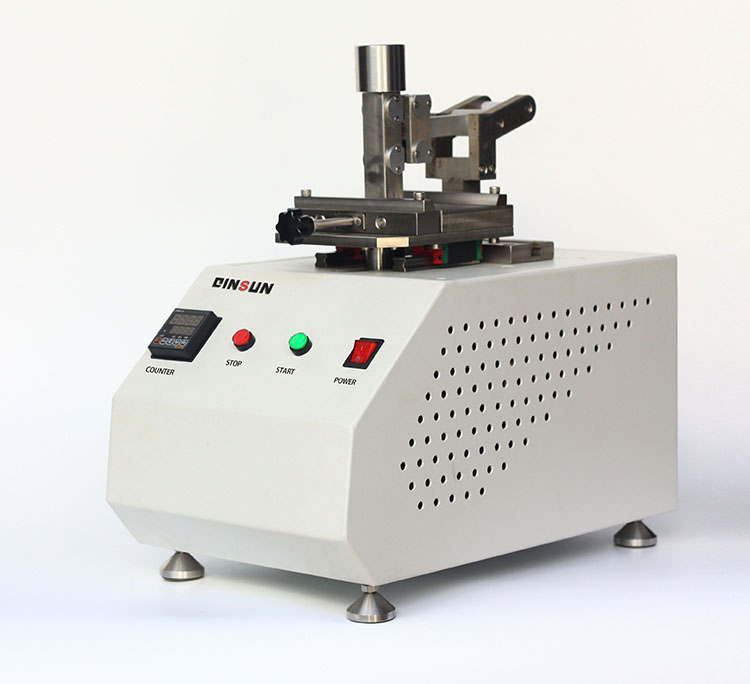
The leather rubbing fastness tester is a specialized device designed to evaluate leather’s color retention under reciprocating friction. By simulating standardized friction processes, it provides quantitative assessment of color transfer and fading according to testing standards.
Definition of the Tester
The tester simulates reciprocating friction between leather samples and standard friction materials, such as wool felt. It fixes the sample in place and moves the friction head back and forth under specified pressure, stroke, and number of cycles. Color changes on both the sample and friction pad are then measured and quantified.
Purpose and Applications
The tester is primarily used to:
Evaluate the stability of leather dyes or surface coatings under friction;
Assess the degree of color transfer to friction materials (e.g., textiles, wool felt);
Provide accurate data for quality control, standard compliance, and certification;
Support R&D for leather materials and process optimization.
It is suitable for natural leather, synthetic leather, coated leather, fur, and other leather materials and products.
Leather rubbing fastness testing is based on simulating repetitive reciprocating friction to imitate daily contact between leather and other objects. Under controlled conditions, it quantitatively evaluates color fading and transfer.
Main Principle
A standard friction head, equipped with wool felt or another standard fabric, applies specified pressure to the fixed leather sample. During testing:
The friction head repeatedly contacts the leather surface;
The friction force simulates real-life usage;
After a defined number of cycles, color transfer or change is assessed.
The color of the leather sample and friction pad is evaluated using grayscale rating systems or color measurement instruments for quantitative assessment.
Dry and Wet Testing
Dry rubbing test: Performed under dry conditions to evaluate color fastness during everyday dry friction.
Wet rubbing test: Uses pre-moistened pads or a humid environment to simulate sweat, rain, or moisture exposure.
Comparing results under both conditions provides a comprehensive evaluation of leather performance in practical use.
Leather rubbing fastness testers are designed to meet standardized testing requirements and generally consist of the following components:
Sample fixing platform: Secures leather samples flat and stable, preventing displacement that could cause errors.
Friction head and pressure system: The friction head uses standard friction materials and weights to apply consistent pressure, typically around 1000 g (head plus weights).
Reciprocating motion mechanism: Drives the friction head along a set distance and speed, often 35–40 mm per stroke at approximately 40 ± 2 cycles per minute.
Control and counting system: Electronic counters and digital displays allow cycle setting, automatic counting, speed adjustment, and automation.
Color evaluation tools: After testing, grayscale charts, colorimeters, or visual comparison boards are used to quantify color change and determine the rubbing fastness rating.
Leather rubbing fastness testing follows standardized protocols:
Sample preparation: Leather samples are cut to standard sizes (e.g., 120 mm × 20 mm) and preconditioned under standard temperature and humidity to ensure consistent status.
Mounting samples and friction head: Samples are fixed on the platform in alignment with the friction direction, and the friction material is secured to the friction head.
Setting pressure and parameters: Apply total pressure (typically 1000 g), set friction distance, speed, and number of cycles according to the relevant standard.
Executing friction test: Start the device to carry out reciprocating friction for the set number of cycles, with automatic counting and stop functions.
Color measurement and evaluation: After testing, assess the color change on the sample and friction pad using grayscale or colorimeter data, assigning a rubbing fastness rating. Repeated tests are often conducted to reduce errors and improve reliability.
To ensure comparability of results, standards specify instrument requirements, testing parameters, evaluation grades, and sample preparation.
International Standard
ISO 11640 Leather – Tests for colour fastness – Colour fastness to rubbing cycles defines the method and evaluation criteria for leather rubbing fastness.
Industry and Regional Standards
SATRA PM173 and DIN 4843 are common in footwear and leather goods;
EN ISO 20344 also includes leather rubbing fastness methods;
Domestic standards such as GB/T 40920‑2021 specify test procedures and technical parameters.
These standards provide a unified framework to ensure reproducible and comparable results across laboratories.
Rubbing fastness results are generally expressed in color fastness grades:
Grayscale evaluation: Compares color change on the sample or friction pad to a standard grayscale card; higher scores indicate better fastness and less transfer.
Colorimeter evaluation: Objective quantification of color change using numerical values from a colorimeter, providing precise assessment of friction effects on color.
These results guide product quality control and inform adjustments to materials, dyeing processes, or finishing techniques to enhance overall leather performance.
Leather rubbing fastness testers are widely applied in:
Leather production and quality control: Evaluates dyeing performance and prevents fading or staining in finished products.
Finished product inspection: Ensures quality of shoes, bags, garments, and other leather goods before shipping.
Standards certification and export compliance: Meets technical assessment and certification requirements for international markets, enhancing competitiveness.
New material and process R&D: Guides optimization of dyes, coatings, and leather finishing processes to improve durability.
Leather rubbing fastness testers are specialized instruments that scientifically evaluate leather color stability and durability under friction. By simulating reciprocating friction and quantifying color change and transfer under standard conditions, they serve not only as quality control tools but also as a critical resource for product development and process improvement. As industry demands for quality and standards increase, rubbing fastness testing has become indispensable for material selection, production control, and market regulation.


