In industries such as printing, packaging, paper, labels, and textiles, print quality is not only reflected in color brightness and accuracy, but more importantly in post-print durability. As product circulation chains become longer, printed materials are subjected to friction, rubbing, and handling forces during production, transportation, distribution, and use. These mechanical actions can cause ink patterns to fade, peel, or blur, ultimately affecting product appearance and information readability. Therefore, conducting objective and quantifiable evaluations of the abrasion resistance of printing inks and coatings has become a critical part of quality control. Against this background, the ink abrasion color fastness testing machine has been developed as a specialized laboratory instrument for evaluating the resistance of inks, coatings, or printed surfaces to friction.
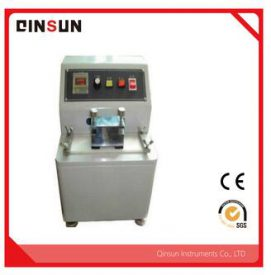
An ink abrasion color fastness testing machine, also known as an ink rub resistance tester, printing ink abrasion tester, or ink discoloration testing machine, is a specialized instrument used to evaluate the abrasion resistance and color fastness of printing inks or surface coatings under frictional conditions. By simulating controlled rubbing actions, the instrument determines the wear resistance of the ink layer or coating under specified numbers of rubbing cycles and applied loads. This allows assessment of ink adhesion, rub resistance, degree of color loss, and the mechanical stability of coatings.
The equipment is widely used in quality inspection and performance evaluation for printed products, corrugated packaging, cartons, color boxes, labels, film materials, and other printed substrates. Through testing, it becomes possible to determine whether inks can withstand friction-induced degradation and color transfer under real-world usage conditions.
Test Principle
The basic principle of the ink abrasion color fastness testing machine is to bring the test specimen into controlled contact with a standard rubbing medium—such as abrasion paper or white cotton cloth—under defined pressure and speed conditions. By controlling parameters such as rubbing cycles, applied load, and rubbing medium type, the instrument simulates friction scenarios encountered during actual use. A specified force is applied to move the rubbing head in a reciprocating motion across the specimen surface, while the number of rubbing cycles and motion behavior are recorded. After testing, changes in color, ink loss, or coating thickness before and after abrasion are compared to evaluate abrasion color fastness.
The instrument is typically operated in accordance with preset testing standards such as ASTM, JIS, GB/T, and TAPPI methods. Test parameters including rubbing speed, weight of the applied load, and number of rubbing cycles are standardized to ensure repeatable and comparable results.
Operating Procedure
A typical ink abrasion color fastness testing procedure includes the following steps:
Sample fixing: Secure the printed specimen onto the lower test platform.
Preparation of rubbing medium: Attach standard white rubbing paper or cloth to the upper rubbing head.
Parameter setting: Enter test parameters on the control panel, including rubbing speed, number of cycles, and applied pressure.
Test execution: Start the instrument to initiate reciprocating rubbing motion until the preset number of cycles is completed.
Result evaluation: Examine the specimen after testing for changes in color fastness, such as fading, ink loss, or the area of pattern degradation, and evaluate results according to relevant standards.
Ink abrasion color fastness testing is not based on subjective judgment but must follow established international and national standards to ensure comparability, reliability, and scientific validity. Commonly applied standards include:
ASTM D5264: Specifies abrasion resistance testing methods for printed materials and coatings.
GB/T 7706: A national standard for rub resistance and ink color loss testing of printed decorative products.
JIS K5701: Japanese industrial standard covering friction color fastness testing methods.
TAPPI T830: A widely used abrasion test standard for paper and paperboard, commonly applied in packaging printing.
These standards define detailed requirements for rubbing pressure, number of cycles, speed, and rubbing medium specifications, ensuring consistency in test conditions. Proper selection of standards and test parameters is critical for meaningful interpretation of results.
Although ink abrasion color fastness testing machines vary in design, they share several common technical characteristics:
Microcomputer Control and Automation
Modern testers are typically equipped with microcomputer-based control systems featuring LCD displays and menu-driven interfaces for parameter input and control. Functions such as power-off memory, automatic operation, and automatic shutdown enhance testing efficiency and reliability.
Adjustable Parameters and Multi-Mode Testing
The equipment allows adjustment of rubbing speed, applied pressure, and number of rubbing cycles to accommodate different materials and testing standards. Some advanced models also support multiple testing modes, such as dry rubbing and wet rubbing, to more realistically simulate actual service conditions.
Precision Mechanical Structure
The testing mechanism usually consists of high-precision motors, gear transmission systems, and linear reciprocating motion components. This design ensures stable rubbing motion and excellent repeatability, resulting in accurate and reliable test outcomes.
Ink abrasion color fastness testing machines play an essential role in various industries:
Printing and Packaging Industry
In printing and packaging applications, products such as color boxes, labels, instruction manuals, and promotional materials must maintain clear graphics and readable text throughout handling and use. Abrasion color fastness testing helps evaluate ink durability under transportation, handling, and frictional stresses, ensuring consistent product quality and brand presentation.
Paper and Paperboard Products
Paper and paperboard materials are widely used in publishing and packaging. Abrasion resistance testing helps assess how different paper substrates influence ink adhesion and retention, providing guidance for material selection and process optimization.
Labels and Identification Materials
Labels are commonly used in logistics, medical, and food industries, where long-term legibility is essential. Abrasion testing effectively evaluates the wear resistance of label inks during application, handling, and removal processes.
Data and evaluations obtained from ink abrasion color fastness testing provide valuable insights for manufacturers:
Ink quality control: Verifying whether ink abrasion resistance meets design and standard requirements.
Material selection optimization: Selecting paper, film, or coating materials better suited for specific applications based on abrasion performance.
Process improvement guidance: Adjusting printing, curing, and finishing parameters to enhance overall quality control.
Regulatory and standards compliance: Ensuring products meet certification and compliance requirements for specific markets through standardized testing.
As an essential instrument for evaluating printing quality, the ink abrasion color fastness testing machine provides a scientific and objective method for assessing the performance of inks and coatings under frictional conditions. Through standardized abrasion testing, it enables comprehensive evaluation of ink durability and coating stability, helping manufacturers improve product reliability, reduce quality risks, and meet applicable standards. With ongoing advances in materials science, control systems, and automation technologies, future testing equipment will become increasingly intelligent and multifunctional, further driving quality inspection toward digitalization and data-driven management.


