In today's world, plastic products are ubiquitous in everyday life, ranging from lightweight automotive components and household appliance housings to food packaging and medical devices. The durability of plastics directly determines the service life and safety of these products. When two plastic components, or a plastic component and a metal component, move relative to each other, friction and wear occur. Which material offers better wear resistance? Which surface treatment can extend component service life? The answers to these questions lie in the Plastic Friction and Wear Testing Machine.
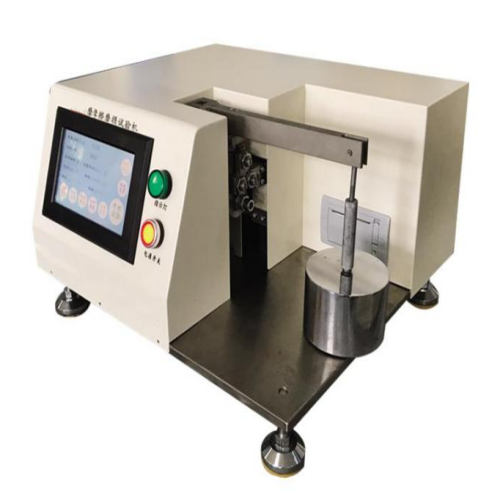
Unlike metals, the friction and wear behavior of plastics is more complex for several reasons:
Temperature Sensitivity: Heat generated by friction is not easily dissipated, causing the plastic surface temperature to rise and the material to soften. This can significantly alter the wear mechanism.
Viscoelasticity: Plastics are viscoelastic materials whose mechanical properties are strongly influenced by loading duration and speed. Their behavior differs considerably from the elastic-plastic deformation characteristics of metals.
Transfer Film Formation: When certain plastics slide against metal, a thin plastic transfer film may form on the metal surface. This film can alter the coefficient of friction and may also protect the plastic itself.
Consequently, general-purpose wear testing machines may not accurately reproduce the actual operating conditions of plastics. Specialized Plastic Friction and Wear Testing Machines have therefore been developed to precisely control test conditions, simulate real-world applications, and provide scientifically reliable evaluation data.
The core principle of a Plastic Friction and Wear Testing Machine is simulation. Under controlled laboratory conditions, it reproduces the friction and wear conditions that materials experience in actual applications, enabling rapid and quantitative evaluation of their wear resistance.
The basic operating principle is as follows:
1. Specimen Preparation: The plastic material to be tested is processed into specimens of standard dimensions.
2. Specimen Mounting and Counterface Contact: The specimen and its counterface are mounted in the specified contact configuration and subjected to the prescribed contact pressure.
3. Load Application: A precise normal force is applied to the contact surfaces using a lever, weights, or a servo motor system to simulate actual operating pressure.
4. Relative Motion: A drive motor generates relative motion between the specimen and the counterface, simulating sliding or rolling friction.
5. Measurement and Recording: High-precision sensors monitor and record the friction force in real time. The coefficient of friction is then calculated using the following formula:
\[ \text{Coefficient of Friction}=\frac{\text{Friction Force}}{\text{Normal Load}} \]
The resulting data are used to generate a coefficient-of-friction curve over the course of the test.
6. Result Evaluation: After testing, the specimen's mass loss is measured using a high-precision balance, or its wear volume is measured using a three-dimensional surface profilometer. The microscopic morphology of the worn surface can also be examined.
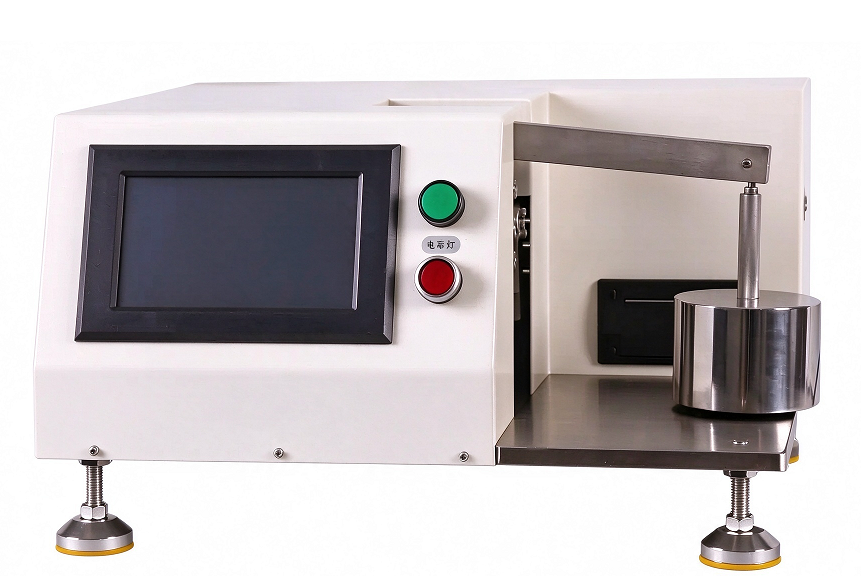
Depending on the contact configuration and motion type, several standardized testing methods are available. Common methods include the following:
Block-on-Ring Test: A rectangular plastic block is pressed against a rotating metal ring under a constant load. This method provides a relatively large contact area, good test repeatability, and broad applicability.
Pin-on-Disc Test: A cylindrical plastic pin is pressed against a rotating disc under a fixed load. Its simple structure and ease of counterface replacement make it particularly suitable for material screening and comparative testing.
Reciprocating Test: The plastic specimen and counterface undergo high-frequency linear reciprocating motion. This method simulates the operating conditions of components such as cylinders, guide rails, and bearings.
Taber Abrasion Test: Two specified abrasive wheels rotate against a flat plastic specimen under a defined load. This method primarily evaluates resistance to scratching and abrasion under the action of loose or fixed abrasives. It is commonly used to test flooring, countertops, coatings, and similar materials.
A friction and wear test produces two principal results.
Coefficient of Friction
The coefficient of friction is a dimensionless value representing the ratio of friction force to normal load. A smoother, more stable curve indicates a more consistent friction process, while a lower value generally indicates lower frictional resistance and smoother relative motion.
Wear Amount
Wear is generally expressed as mass loss in milligrams or volume loss in cubic millimeters. It is one of the most direct indicators of material wear resistance. Under identical test conditions, a material with lower wear loss generally demonstrates better wear resistance.
By comparing test data from plastics with different formulations, manufacturing processes, or surface treatments under the same conditions, engineers can scientifically determine which materials offer superior wear resistance. These results support material development, quality control, and product selection.
The applications of a Plastic Friction and Wear Testing Machine extend far beyond ranking materials according to wear resistance.
Failure Analysis: Scanning the worn surface with an electron microscope allows engineers to identify the wear mechanism more accurately and determine directions for improving the material at its source.
Operating Condition Simulation: Advanced testing machines can simulate specific environments, including high-temperature chambers, low-temperature chambers, vacuum conditions, and liquid immersion, to evaluate material performance under representative service conditions.
Lubricant Evaluation: The machine can be used to evaluate how different lubricants improve the performance of friction pairs and identify suitable lubrication solutions.
The Plastic Friction and Wear Testing Machine is not merely a precision testing instrument; it is also a bridge between the microscopic structure of materials and their macroscopic performance.As testing technology continues to advance, future testing machines will become increasingly intelligent and multifunctional, with the ability to simulate more complex operating conditions. This will provide stronger technical support for the development and application of high-performance plastic materials.Understanding the principles and applications of this equipment is important for improving product quality and promoting materials innovation.
Prev:What is a sand-abrasion test machine for motorcycle helmets?
Next:No more


