In the field of materials science and engineering, evaluating the abrasion resistance of material surfaces is essential for ensuring product quality and extending service life. As a specialized testing instrument, the Falling Sand Abrasion Tester simulates the impact and friction caused by sand particles on material surfaces under natural environmental conditions. It provides scientific data for the research and development, performance evaluation, and quality control of coatings, plastics, rubber, and metal surface treatment layers.This article provides an in-depth analysis of the working method, key application areas, standard testing procedure, and equipment maintenance requirements of the Falling Sand Abrasion Tester.
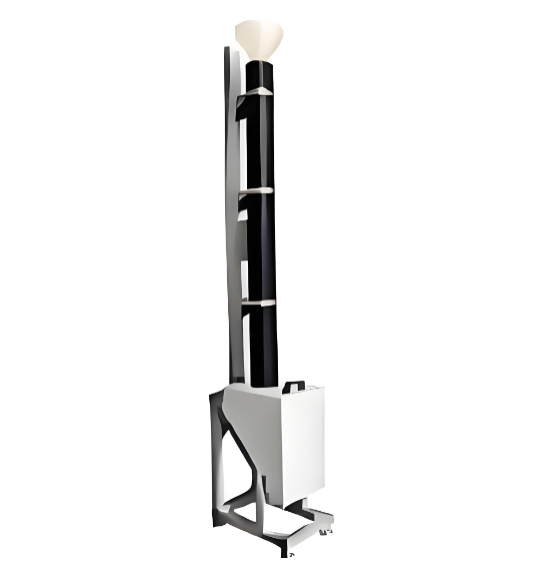
The Falling Sand Abrasion Tester is an important testing instrument for evaluating the abrasion resistance of organic coatings. Its basic principle is to simulate abrasive particles freely falling from a specified height and impacting the coating surface until the substrate is exposed, thereby quantifying the coating's resistance to abrasive wear.
This test method is conducted in accordance with applicable industry standards to ensure the scientific validity and comparability of the test results. The following section presents a standardized testing procedure without specifying particular numerical parameters.
1. Test Preparation and Environmental Conditioning
The accuracy of the test begins with proper specimen preparation and environmental conditioning. Test panels should be coated in accordance with the applicable standard and conditioned in a controlled-temperature and controlled-humidity environment.
This conditioning process is intended to minimize the effects of changes in temperature and humidity on the physical properties of the coating and ensure that the test is conducted under standardized conditions.
Before testing, a suitable coating thickness measuring instrument should be used to determine the coating thickness. Measurements should be taken at multiple designated points within the test area, and the average value should be recorded as the basis for subsequent calculations.
2. Instrument Calibration and Adjustment
Before the formal test, the Falling Sand Abrasion Tester must be accurately calibrated to ensure stable abrasive flow and consistent impact conditions.
Abrasive Flow Alignment
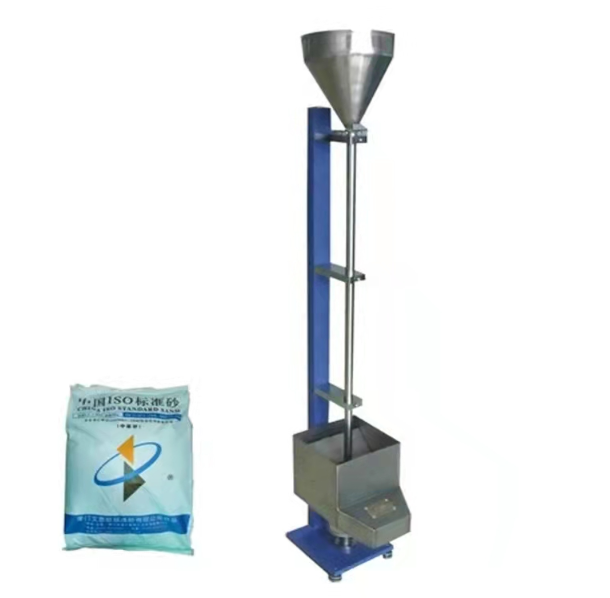
Pour the standard abrasive into the hopper and observe the falling sand at the lower end of the delivery tube. Adjust the leveling or positioning screws at the bottom of the instrument to ensure that the central axis of the abrasive stream is correctly aligned with the geometric center of the flow path.
Calibration should be observed from two mutually perpendicular viewing angles to minimize visual alignment errors.
Falling Height Adjustment
Use the height-adjustment mechanism to adjust the vertical distance between the lower end of the delivery tube and the surface of the test panel.
The distance must comply with the applicable standard to ensure that the abrasive particles possess the specified impact energy when they strike the coating surface.
Flow Rate Calibration
Measure the time required for a specified volume of standard abrasive to pass through the delivery system and verify that the abrasive flow rate meets the applicable requirements.
If a significant deviation is observed, inspect the smoothness of the inner wall of the delivery tube and the particle-size distribution of the abrasive. Replace the standard abrasive when necessary.
Verification of the Wear Area
Conduct a preliminary test to verify the shape of the wear mark produced by the falling abrasive particles.
Ideally, the wear area should have an elliptical shape, with its major-to-minor axis ratio and center position conforming to the applicable standard requirements. If significant deviations are observed, make minor adjustments to the test-panel fixture angle or the position of the delivery tube.
3. Formal Testing Procedure
Test Panel Fixation
Securely mount the conditioned test panel onto the specimen fixture, ensuring that the designated test area is accurately positioned beneath the center of the delivery tube outlet.
Abrasive Impact
Add an appropriate amount of standard abrasive to the hopper and activate the falling-sand mechanism. The abrasive particles pass through the delivery tube and accelerate before vertically impacting the coating surface.
During the test, a collection container at the bottom of the apparatus collects the discharged abrasive for subsequent measurement.
End-Point Determination
Continue the falling-sand abrasion process until the coating is worn through and the specified area of the underlying substrate becomes exposed.
To prevent excessive wear beyond the required endpoint, reduce the amount of abrasive added per cycle as the endpoint is approached. Small incremental additions should be used until the exposed substrate area can be clearly observed to meet the applicable standard criterion.
Repeated Testing
Repeat the above procedure at different designated areas of the same test panel to obtain independent test data for each location.
4. Result Calculation and Analysis
After the test is completed, collect and measure the total volume of abrasive consumed.
The abrasion resistance value is calculated based on the ratio between the volume of abrasive consumed and the coating thickness. This indicator represents the amount of abrasive impact that a coating can withstand per unit of coating thickness.
A higher abrasion resistance value indicates better resistance to abrasive wear.
For improved data representativeness and reliability, the final result should include the average abrasion resistance value obtained from all test areas on the same panel, as well as the overall average of the results obtained from multiple test panels.
5. Precautions and Equipment Maintenance
Abrasive Management
Standard abrasive should be screened periodically to remove particles that have fractured or become excessively fine due to repeated use. The abrasive should also be replaced according to the specified number of test cycles to maintain consistent particle-size characteristics.
Equipment Cleaning
After each test, tilt the instrument as necessary to remove residual abrasive from the hopper and flow system. This helps prevent blockage of the flow control mechanism and ensures accurate flow calibration for subsequent tests.
Environmental Consistency
It is recommended that both testing parties use standard abrasive from the same source and conduct testing under consistent environmental conditions whenever comparative testing is required. This helps reduce systematic errors and improves the comparability of test results.
1. Building and Decorative Materials Industry
The building and decorative materials industry is one of the most important and widely established application areas for falling sand abrasion testing. In this field, the Falling Sand Abrasion Tester is primarily used to evaluate the surface abrasion resistance of anodized films and fluorocarbon coatings on aluminum alloy architectural profiles, as well as ceramic tiles.
For quality control of building components such as curtain walls, doors and windows, and paving tiles, manufacturers and testing laboratories use the instrument to simulate the continuous impact and abrasive action of wind-blown sand on material surfaces.
This testing process provides a scientific evaluation of the durability and wear resistance of materials under long-term outdoor exposure. It helps prevent surface damage, fading, and premature deterioration caused by wind and sand erosion, thereby maintaining the long-term appearance, protective performance, and service life of building materials.
2. Coatings and Automotive Industry
The Falling Sand Abrasion Tester also plays an important role in the coatings and automotive industries. It can be used to evaluate the abrasion resistance of various coating systems, including automotive clear coats, industrial anticorrosion coatings, and wood coatings.
The test simulates the impact and scratching effects of sand and abrasive particles on coating surfaces during high-speed movement. It provides valuable information for evaluating the coating's surface durability, adhesion, and protective performance.
In particular, the test is useful for assessing the ability of automotive coatings to resist scratches, surface dulling, and coating deterioration caused by wind-blown sand and road debris during highway driving. The resulting data can also support coating formulation optimization and improvements to the painting process.
3. Plastics and Electronic Products
The Falling Sand Abrasion Tester is also widely used in the plastics and electronic products industries to help ensure product appearance and durability during everyday use.
The instrument can be applied to products such as mobile phone housings, coated optical lenses, and plastic pipes to evaluate their surface abrasion resistance and long-term wear performance. It simulates practical wear conditions involving repeated friction, scratching, and contact with sand particles.
Through standardized testing, manufacturers can evaluate the scratch resistance and long-term surface stability of products before they leave the factory. The test results support continuous optimization of material selection, surface treatment, and product design, helping improve user experience and enhance product competitiveness in the market.
1. Improving Product Durability and Reliability
The application of the Falling Sand Abrasion Tester directly contributes to improved product durability and reliability. By accurately simulating wear conditions encountered in actual service environments, the tester helps identify and address potential performance issues at an early stage, reducing problems such as surface wear, peeling, and discoloration during use and extending product service life.
2. Reducing Maintenance Costs and Improving Production Efficiency
Optimized materials with better abrasion resistance can significantly reduce product maintenance costs and replacement frequency. At the same time, improving product durability and reliability can reduce production downtime and maintenance requirements, thereby increasing overall manufacturing efficiency.
3. Supporting Materials and Manufacturing Innovation
The Falling Sand Abrasion Tester provides a valuable testing platform for innovation in materials science and manufacturing processes. Through comparative testing and optimization verification, manufacturers can accelerate the development of new materials and processes and develop more advanced and reliable solutions for industrial manufacturing.
4. Supporting Environmental Protection and Sustainable Development
Improved abrasion resistance helps reduce resource consumption and environmental impact. By extending product service life, manufacturers can reduce waste generation and the consumption of raw materials, supporting more sustainable production and environmental protection.
5. Enhancing Market Competitiveness and Brand Reputation
Products with excellent abrasion resistance can earn greater customer confidence and market acceptance, strengthening a company's competitiveness. By consistently delivering high-quality and reliable products, manufacturers can also enhance their brand image, reputation, and customer trust.
Overall, the Falling Sand Abrasion Tester is a precision instrument designed to simulate the impact and abrasive effects of sand particles. It plays an important role in evaluating the abrasion resistance of materials and surface coatings such as coatings, metals, plastics, and ceramics.Its application across multiple industries provides scientific and objective data for material development, quality control, product evaluation, and process optimization. As testing technologies continue to advance and application areas expand, the Falling Sand Abrasion Tester will continue to play an important role in materials science and industrial manufacturing, providing reliable technical support for the development of more durable, efficient, and sustainable products.


