In the field of materials science and engineering, friction performance is one of the key indicators for evaluating the durability, reliability, and applicability of materials. To accurately quantify the friction behavior of materials under specific conditions, the End-Face Friction Tester serves as an important research and testing instrument and is widely used in tribological performance studies of various materials.By simulating the relative sliding motion between material end faces under applied pressure, the tester provides a stable and repeatable testing environment, enabling accurate measurement of friction coefficients and wear data. These reliable test results provide a solid data foundation for material research and development, material selection, and performance optimization.
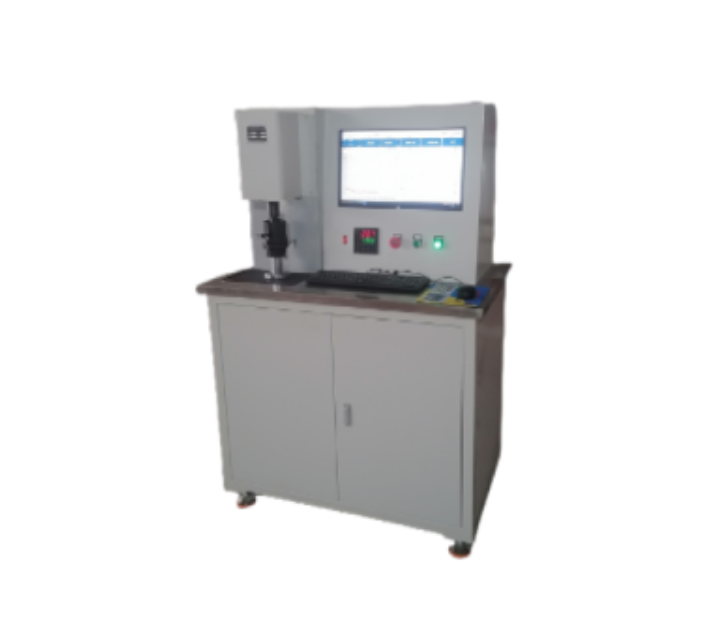
The working principle of the End-Face Friction and Wear Tester is mainly based on classical tribological theories. Its core structure typically consists of a fixed upper specimen and a rotating lower specimen disk, with their end faces in close contact.
During the test, a loading system applies a constant normal load to the specimens to simulate the pressure conditions encountered in actual operating environments. The lower specimen disk is driven by the rotating system at a constant speed, creating relative sliding between the contact surfaces of the upper and lower specimens.
During this process, sensors continuously monitor and record changes in the friction torque. The dynamic friction coefficient can then be calculated based on the measured friction data. The tester can also quantitatively evaluate the material’s wear rate and wear mechanism by measuring specimen mass loss, changes in surface morphology, or the dimensions of wear scars.
The entire testing process is usually conducted under controlled environmental conditions, such as temperature, humidity, and lubrication conditions, to ensure the comparability, reliability, and accuracy of the test results.
The End-Face Friction and Wear Tester has a wide range of applications, covering various material systems and industrial fields.
1. Metal Material Research
In the field of metal materials, this equipment is commonly used to evaluate the friction and wear performance of different alloys, heat treatment processes, and surface coatings.
For example, it can be used to study the wear resistance of newly developed high-strength steels under dry friction or lubricated conditions, providing a basis for material selection of mechanical transmission components such as bearings and gears. By comparing test data from different materials, researchers can determine the relationship between material hardness, toughness, microstructure, and tribological performance.
2. Evaluation of Polymers and Composite Materials
For non-metallic materials such as engineering plastics, rubber, and self-lubricating composites, the End-Face Friction and Wear Tester can evaluate their friction behavior under different loads and sliding speeds, as well as analyze the influence of fillers on friction coefficients and wear rates.
This capability is essential for developing low-friction and high-wear-resistance components, such as sealing parts, bearing bushings, and other precision mechanical components.
3. Testing of Ceramic and Coating Materials
Ceramic materials are widely used under harsh operating conditions due to their high hardness and excellent high-temperature resistance. The tester can be used to evaluate the friction performance of structural ceramics, functional ceramics, and ceramic coatings, as well as investigate their failure mechanisms under high-temperature or corrosive environments.
For hard coatings produced through Physical Vapor Deposition (PVD) or Chemical Vapor Deposition (CVD) processes, this equipment serves as an effective tool for evaluating their friction reduction and wear resistance performance.
4. Lubricant Performance Evaluation
In lubricant development, the End-Face Friction and Wear Tester is often used as an evaluation and screening platform. By testing the friction coefficient and wear resistance of different base oils and additive formulations under specific material pairings, researchers can quickly assess the extreme pressure performance, anti-wear properties, and friction-reducing effects of lubricants.
The test results provide valuable guidance for optimizing lubricant formulations.
5. Simulation of Actual Operating Conditions
In addition to standard testing methods, the equipment can be equipped with accessories such as environmental chambers and liquid lubrication circulation systems to simulate specific operating conditions, including high temperature, vacuum, and liquid immersion environments.
This allows researchers to study the tribological behavior of materials under special conditions, further expanding the potential applications and performance limits of advanced materials.
With the continuous development of materials science toward more advanced applications and increasingly complex operating environments, higher requirements have been placed on friction performance testing technologies. The technology of the End-Face Friction and Wear Tester is also continuously evolving to meet these new challenges.
1. Diversification of Testing Environments
Future testing equipment will place greater emphasis on multi-field coupled environment simulation capabilities. Advanced systems will be able to perform in-situ friction testing under conditions such as high and low temperature cycling, different gas atmospheres, vacuum environments, and complex media.
These developments will better meet the evaluation requirements of advanced materials used in extreme environments, including aerospace equipment, deep-sea systems, and chemical machinery.
2. Integration of Online Monitoring Technologies
The integration of advanced online monitoring technologies is becoming an important development trend.
For example, acoustic emission sensors can be incorporated to monitor microscopic fracture signals generated during friction processes. Raman spectroscopy or infrared thermal imaging technologies can also be combined to analyze chemical changes or temperature distribution within the friction contact area in real time.
These technologies provide dynamic process information, enabling researchers to gain a deeper and more comprehensive understanding of the mechanisms behind friction and wear.
3. Development Toward Intelligence and Automation
By introducing artificial intelligence and machine learning algorithms, friction and wear testers can achieve intelligent optimization of testing parameters, early identification and prediction of wear conditions, and rapid mining and correlation analysis of large-scale test data.
Improvements in automation, such as automatic specimen loading and unloading, as well as automatic wear scar measurement, will further enhance testing efficiency, repeatability, and consistency.
4. Expansion of Micro-Scale Testing Capabilities
In addition to conventional macro-scale friction testing, the integration or functional extension of micro-scale and nano-scale testing technologies can help establish a connection between material microstructure and macroscopic friction performance.
This development will provide fundamental guidance for the tribological design and optimization of advanced materials from the microscopic level.
5. Standardization and Data Sharing
Promoting the standardization of testing methods and establishing comprehensive databases of material friction and wear performance will improve data comparability and sharing among different research institutions.
Such efforts will accelerate the development and application of new materials and contribute to advancements in tribology research.
As a key instrument for material tribology research, the End-Face Friction and Wear Tester provides essential technical support for gaining a deeper understanding of friction and wear behavior, developing high-performance new materials, and optimizing lubrication technologies through its precise testing capabilities.
1. Accurate Evaluation of Friction and Wear Performance
By simulating end-face contact sliding conditions, the End-Face Friction and Wear Tester can accurately and stably measure the friction coefficient and wear amount of materials, making it one of the core testing devices in tribology research.
2. Wide Range of Applications
The equipment is widely applicable to various material systems, including metals, polymers, ceramics, and coatings, as well as lubricant performance evaluation. Through environmental simulation capabilities, it can further expand research boundaries and support the study of material tribological behavior under complex operating conditions.
3. Reliable Testing and Future Development Trends
A combination of rigorous testing procedures, detailed data analysis, and advanced characterization technologies ensures the reliability of research results. In the future, this technology will continue to develop toward multi-field coupling, online monitoring, intelligent operation, and micro/nano-scale testing, meeting increasingly complex research requirements.
Overall, the End-Face Rotary Friction and Wear Tester plays an indispensable role in materials science and tribology research. It is not only a core tool for evaluating material friction and wear performance but also an important foundation for advancing new material development and optimizing engineering applications.We sincerely welcome you to contact us for more detailed information about the tester, including technical specifications, application cases, and customized solutions. We are committed to providing comprehensive product information and professional support to help advance your research and engineering projects successfully.


