The Helmet Surface Friction Tester is a device used to evaluate the frictional properties of helmet surfaces. It measures how the helmet outer material interacts with different surfaces or materials, helping to assess slip resistance, abrasion, and overall surface durability under controlled conditions.
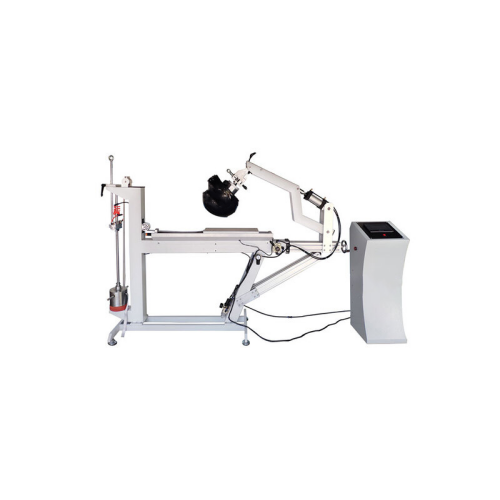
The Helmet Surface Friction Tester evaluates the friction resistance of helmets. The helmet is pressed onto a movable fixture with a specified force. The fixture surface is covered with sandpaper of a standard-defined grit. The test helmet is then moved across the sandpaper at a controlled speed, allowing assessment of the helmet’s frictional performance.
Meets the requirements of ECE R22.05.
(1)Test Pads and Sliders: Standardized materials for simulating hand or surface contact.
(2)Helmet Holders/Fixtures: Secure helmets in a repeatable position for consistent testing.
(3)Force Sensors: Measure frictional forces accurately during testing.
(4)Data Acquisition System: Collects real-time friction data for analysis.
(1)The tester can perform friction tests on both protruding areas and flat surfaces of the helmet.
(2)Impact weight: 15 kg
(3)Free-fall height: 500 mm
(4)Load cell force: 400 N (40.8 kg)
(5)Release mechanism controlled by an electromagnet
(6)Sandpaper or shear blocks can be installed on the horizontal guide frame to perform linear friction with the helmet surface.
(7)Adjustable helmet mounting fixture
(8)Touchscreen control
Sample Preparation: Clean helmets and mount securely in the fixture.
Parameter Setup: Set normal load, sliding speed, and contact angle according to test requirements.
Friction Measurement: Move test pad or slider across the helmet surface while recording friction force.
Data Analysis: Evaluate surface friction coefficient, wear, or abrasion patterns.
Daily Cleaning: Wipe test pads, sliders, and helmet fixtures after each test.
Sensor Calibration: Regularly check and calibrate force sensors for accurate measurement.
Inspection of Moving Parts: Lubricate slides, check for wear, and replace worn components.
Storage: Keep the tester in a clean, dry environment, away from dust or corrosive substances.


