The Shoelace Abrasion Tester is designed to evaluate the wear resistance of shoelaces and eyelets by simulating the friction and tension experienced during actual footwear use. The instrument provides objective durability data, including the number of cycles to failure, enabling quality control, R&D, and performance verification of footwear lacing systems.
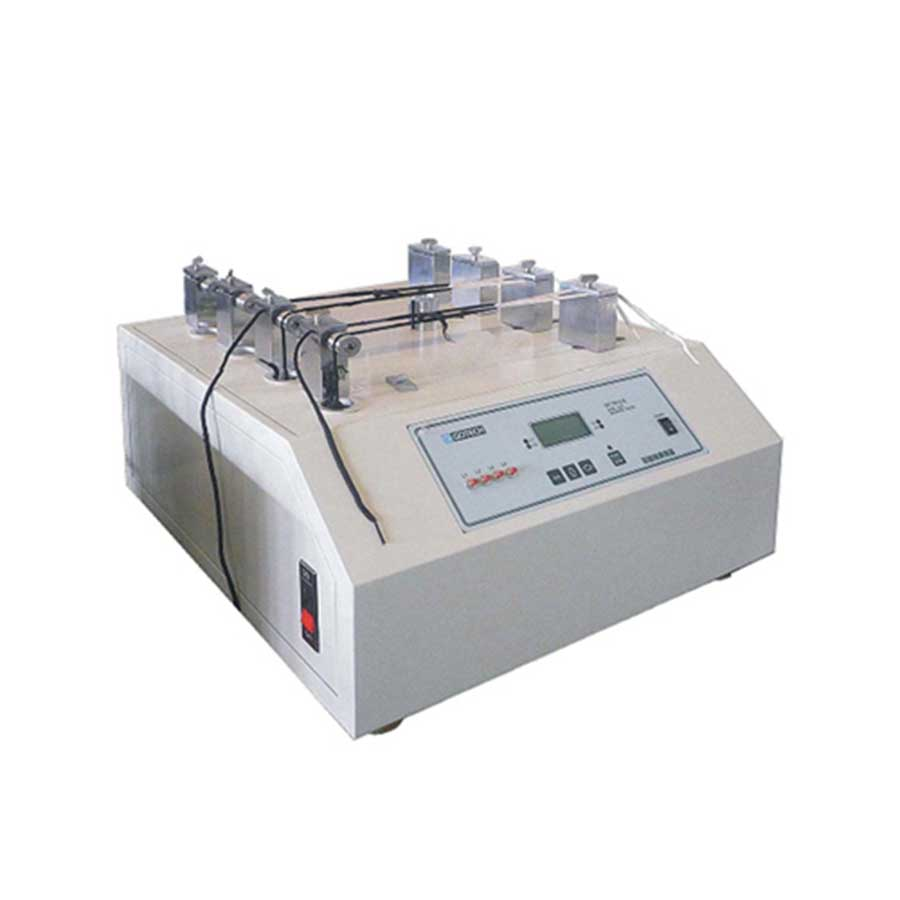
The tester is suitable for evaluating the abrasion resistance of shoelaces and eyelets in:
(1) Athletic shoes: Running shoes, basketball shoes, football shoes.
(2) Casual shoes: Sneakers, loafers, canvas shoes.
(3) Work and safety footwear: Industrial boots, steel-toe shoes with reinforced eyelets.
(4) Children’s footwear: School shoes and sports shoes with frequent lacing.
(5) Leather footwear: Dress shoes with leather laces and metal eyelets.
(6) Outdoor footwear: Hiking boots, trekking shoes, and waterproof boots.
(7) Footwear R&D: Testing innovative shoelace materials, coatings, or eyelet designs.
(1) SATRA TM93 — Footwear: Shoelace and Eyelet Abrasion Test
(2) DIN 4843 — German Standard for Footwear Component Abrasion
(3) QB/T 2226 — Chinese Standard for Shoelace and Eyelet Durability
(4) SATRA TM154 — Footwear Lacing System Durability Testing
(5) ISO 22774 — Textiles and Plastics – Shoelace Abrasion Testing
(6) EN ISO 20344 — Personal Protective Equipment — Footwear — Test Methods
(7) ASTM F2023 — Standard Test Method for Footwear Components
(8) BS 5131:3.6:1991 — British Standard for Footwear Lacing Components
(1) Evaluates durability and service life of shoelace-eyelet systems under realistic wear conditions.
(2) Simulates actual friction and tension to ensure reliable and repeatable test results.
(3) Six simultaneous test positions improve testing efficiency.
(4) Provides objective, quantitative results for quality control and R&D purposes.
| Item | Specification |
|---|---|
| Test Positions | 6 |
| Weights | 455 g ± 5 g, 6 pcs |
| Test Speed | 100 ± 5 cpm |
| Stroke | 76 ± 2 mm |
| Standard Eyelet | Brass, inner diameter 4.5 mm |
| Fiberboard | 25 × 25 mm, inner diameter 5.0 ± 0.2 mm |
| Control Method | Touch-screen control |
| Counter | 0–999.999 cycles |
| Power Supply | 1∮ AC 220V 50/60 Hz |
| Dimensions (W×D×H) | 57 × 58 × 1025 mm |
| Weight (approx.) | 60 kg (excluding weights) |
(1) Standard weights (455 g × 6)
(2) Fiberboard with pre-mounted brass eyelets (6 pcs)
(3) User manual and calibration certificate
(4) Power cable
(5) Wrench for sample installation
(1) Install the fiberboard with standard eyelets into the test fixture.
(2) Thread the shoelace through the eyelets at the specified angles (90° at the eyelet, 45° at the fiberboard).
(3) Attach the standard weights (455 g) to each test position.
(4) Set the desired test speed (100 ± 5 cpm) and stroke (76 ± 2 mm) on the touch-screen interface.
(5) Start the test and monitor the abrasion cycles.
(6) The test automatically stops when the shoelace fails or the preset number of cycles is reached.
(7) Record the number of cycles to failure as a measure of durability.
(1) Keep the instrument clean and free from dust or water.
(2) Lubricate moving parts every 3 months to ensure smooth operation.
(3) Periodically check the alignment of eyelets and fiberboards to maintain test accuracy.
(4) Calibrate the weights and stroke length annually or after heavy use.
(5) Inspect the electrical system and touch-screen interface for damage or loose connections.


