The seat belt abrasion tester is used to evaluate the wear resistance of materials, especially seat belt materials. This tester is a bench-top type with five testing stations.The operator places the test sample and threads the seat belt material through the designated path. Then, the desired number of test cycles is set on the cycle counter, and the test begins. Once the preset number of cycles is reached, the machine stops automatically. The test samples are then evaluated visually.
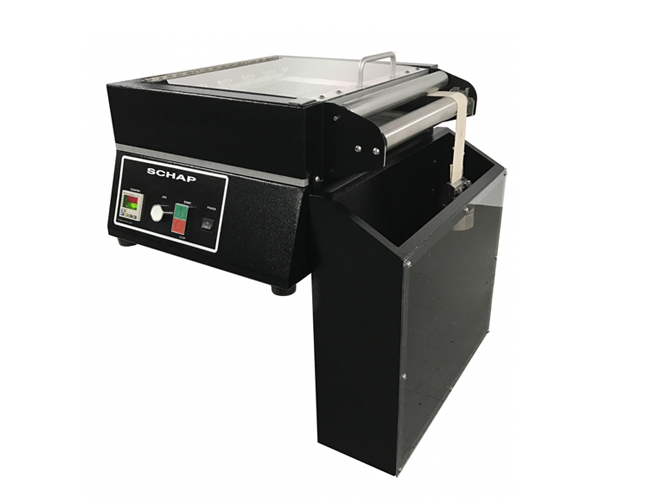
The Seat Belt Durability Tester / Seat Belt Abrasion Tester is suitable for testing the abrasion resistance of various webbings, slings, and automotive seat belts. It features a bench-top design with five testing stations.
ISO 10555 (Seat Belt Assemblies - Test Methods for Abrasion Resistance)
ECE R16 (Uniform Provisions Concerning the Approval of Safety Belts and Restraint Systems)
FMVSS 209 (Federal Motor Vehicle Safety Standard for Seat Belt Assemblies)
Precision Abrasion Testing
High-resolution force sensor (±0.01 N accuracy) captures subtle webbing degradation, critical for ensuring post-crash performance.
Automated Test Cycles
Programmable waveforms simulate decades of real-world usage (e.g., seat belt retraction, emergency locking) in days.
Advanced Material Analytics
AI-powered software predicts wear patterns, tracks fraying, and generates ISO/ASTM-compliant reports automatically.
User-Centric Design
15.6-inch touchscreen interface with multilingual support (English, German, Chinese, Spanish) and one-touch test protocol selection.
Industrial Durability
Corrosion-resistant frame, IP65 enclosure, and anti-vibration feet ensure long-term reliability in demanding labs.
Multi-Mode Testing:
Abrasion Resistance: Applies oscillating friction (0–50 N) at angles up to ±45°.
Load Retention: Measures webbing tensile strength after 100.000+ cycles.
Temperature Control: -30°C to +80°C chamber for accelerated aging tests.
Real-Time Monitoring:
High-speed cameras (2.000 FPS) capture webbing fraying and edge wear.
Data Management:
Cloud-compatible software stores 100.000+ test results, generates ECE/FMVSS reports, and supports barcode scanning.
Universal Specimen Compatibility:
Adjustable clamps accommodate all webbing types (polyester, nylon, Kevlar®).
Specimen Clamps: Adjustable fixtures for polyester, nylon, and Kevlar® webbing.
Calibration Kit: Force sensor, angular encoder, and NIST-traceable certification.
Safety Gear: Heat-resistant gloves, face shield, and emergency eyewash station.
User Manual & Software: Digital guide (multilingual) + AI analytics platform for fatigue life prediction.
Environmental Chamber: Temperature-controlled enclosure with antifreeze additive.
Automotive OEMs (seat belt manufacturers, safety systems R&D labs)
Regulatory testing agencies (ECE, FMVSS compliance)
Aerospace seating durability testing
Consumer product safety laboratories
| Parameter | Specification |
|---|---|
| Abrasion Force Range | 0–50 N (±0.01 N accuracy) |
| Angular Adjustment | ±45° (±0.01° resolution) |
| Frequency Range | 0.1–15 Hz (adjustable) |
| Temperature Control | -30°C to +80°C (±0.5°C accuracy) |
| Data Acquisition Rate | 150.000 Hz (force/angular channels) |
| Power Supply | 220V/110V AC, 50/60Hz, 2.5kW |
| Dimensions (L×W×H) | 1.3×0.9×1.8 m |
| Weight | 380 kg |
| Operating Environment | 5–40°C, ≤85% RH (non-condensing) |
1.What is this product?
This product is a seat belt durability and abrasion tester used to evaluate the wear resistance of seat belts and similar materials.
2.What is this product used for?
It is used to test the abrasion performance of webbings, slings, and automotive seat belts in order to assess their durability and quality.
3.What is the working principle of this product?
The sample is subjected to repeated friction under controlled conditions. After a preset number of cycles, the machine stops automatically, and the wear condition is evaluated.
4.Why is this product important?
It ensures that seat belt materials meet required durability standards, helping to improve safety and reliability in practical use.
5.What industries is this product suitable for?
It is suitable for automotive manufacturing, textile production, quality inspection departments, and research institutions.


